

Quick answer: A seller concession is money the seller agrees to put toward your closing costs, not a lower price. How much a seller can contribute depends on your loan type, not on what you and the seller agree to in the contract. FHA caps it at 6 percent of the sales price. VA caps it at 4 percent. Conventional loans (Fannie Mae and Freddie Mac) cap it at 3, 6 or 9 percent depending on your down payment, and 2 percent on an investment property. USDA caps it at 6 percent. Go over the cap and the extra doesn't disappear, it gets treated as a price reduction and your loan amount gets recalculated against the lower number.
If you're writing an offer in Thompson's Station, Spring Hill or Franklin and the seller says they'll "cover your closing costs," the real question is how much they're allowed to cover on your specific loan. Here's what each program actually says, as of today.
Seller concession limits by loan type
| Loan type | Limit | How it's measured | What's excluded from the cap | Source |
|---|---|---|---|---|
| FHA | 6% | Percentage of the sales price | Real estate agent commissions the seller customarily pays under local or state custom; a lender credit that comes from premium pricing | HUD Handbook 4000.1, Section II.A.5, Interested Party Contributions and Inducements to Purchase |
| VA | 4% | Percentage of the home's VA-established reasonable value (ask your lender to confirm how this compares to your contract price) | Normal closing costs the seller pays as local custom, and discount points that aren't excessive for the market, both handled separately from the 4% | VA Lender's Handbook (VA Pamphlet 26-7), Chapter on loans requiring special underwriting and other considerations |
| Conventional (Fannie Mae / Freddie Mac) | 3% above 90% LTV, 6% from 75.01% to 90% LTV, 9% at 75% LTV or below. 2% flat on investment property | Percentage of the lower of the sales price or the appraised value | Seller-paid fees that are "common and customary" for the area, a lender credit from premium pricing, a prorated property tax credit where taxes are paid in arrears | Fannie Mae Selling Guide B3-4.1-02, Interested Party Contributions (IPCs); Freddie Mac Single-Family Seller/Servicer Guide Section 5501.6 |
| USDA | 6% | Percentage of the sales price | Not itemized the way the conventional guides itemize it. USDA separately restricts seller-funded buydown accounts and loan discount points under its own loan restrictions, so ask your lender exactly what your concession can and can't cover | 7 CFR 3555.102(h) |
Fannie Mae and Freddie Mac match on this one: same three percentages, same 90 and 75 percent breakpoints, same 2 percent flat cap on investment property.
A note on that VA row. The 4 percent cap comes from VA's Lender's Handbook rather than a numbered federal regulation, and lenders read the fine points differently, especially how discount points are counted. If your contract price and the VA reasonable value come out different, ask your loan officer which number the 4 percent is measured against before you count on an exact dollar figure.
A concession is not a price reduction
These get confused constantly, and they do different things.
A price reduction lowers what you're agreeing to pay for the house. The sales price on the contract goes down, and so does the loan amount you need.
A seller concession keeps the sales price the same and instead has the seller hand over money, usually applied to your closing costs, prepaid items like insurance and property tax escrows, or a rate buydown. The sales price on the contract, and on the appraisal, stays what you agreed to pay for the house itself.
The full, unreduced sales price is what gets compared to the appraised value. If concessions go over the cap for your loan type, the excess gets treated as if the price had been reduced by that amount, and your loan-to-value ratio gets recalculated off the lower number.
A builder incentive is a seller concession, legally
If you're buying new construction in Spring Hill or Thompson's Station and the builder is offering to cover closing costs, pay down your rate, or throw in a design-center credit, that's not a separate category from a seller concession. Under every one of these loan programs, a builder or developer is treated as an "interested party" to the transaction, the same as the person selling a resale home. Fannie Mae's and Freddie Mac's guides name builders and developers directly as interested parties, and FHA's interested-party definition covers them too.
That means a builder's incentive package counts against the same percentage cap as a concession on any other home. A builder offering $20,000 in incentives on a $450,000 new-construction FHA purchase is still capped at 6 percent, same as a resale seller would be. See my builder incentives roundup and the current builder offers for what's actually on the table right now.
A rate buydown counts too
A seller- or builder-paid rate buydown, temporary or permanent, is a financing concession. It gets paid for with the same pool of dollars as closing-cost help, and it counts toward the same cap as everything else in that pool.
This shows up most with new construction, where a builder will offer a 2-1 buydown (a lower rate for the first two years that steps up to the real rate) instead of, or alongside, closing-cost help. Run the actual numbers on my buydown calculator before you decide whether you'd rather have the rate bought down or the cash applied to your closing costs. Either way, it's drawn from the same capped amount, not extra on top of it.
The contract and the appraisal both matter
The percentage cap is calculated against a dollar figure, and that figure depends on what the home appraises for, not just what you agreed to pay.
For conventional loans, the rule is explicit: the cap applies to whichever is lower, the sales price or the appraised value. If a home is under contract for $420,000 and appraises for $410,000, the concession limit is based on $410,000, not the higher contract price.
If the appraisal comes in under the contract price on any of these loan types, ask your lender how that changes the dollar amount available, before you count on a specific number of dollars from the seller.
A worked example
Say you're buying a home in Franklin for $400,000 with a conventional loan and 10 percent down, so your loan-to-value ratio is 90 percent. That lands you in the 75.01 to 90 percent bracket, which caps the concession at 6 percent.
- Maximum concession: $400,000 x 6% = $24,000
- The seller offers $12,000 toward your closing costs and prepaids. That's under the cap, so it's accepted as written.
- If the seller instead offered $30,000, the $6,000 over the cap would be treated as a sales concession. The $400,000 price would effectively be treated as $394,000 for loan-to-value purposes, and your loan amount would be based on that lower figure, not the full contract price.
This is an example only, built with round numbers to show the mechanics. Your actual cap depends on your loan type, your down payment, and your appraisal. Ask your lender to run your real numbers before you negotiate a concession into an offer.
Rates, incentives and buydowns: the standard disclosure
Rates, APRs, buydowns and builder incentives mentioned on this page are published by the builder or lender named, were read on the date shown, and can change or end without notice. They are not an offer of credit from me or eXp Realty.
I'm a licensed Realtor (TREC 369038), not a mortgage lender. The seller concession limits above are set by each loan program and enforced by your lender's underwriting, not by me. Confirm the current terms, your exact cap, and how your appraisal affects it in writing with your lender before you rely on any of these numbers in an offer.
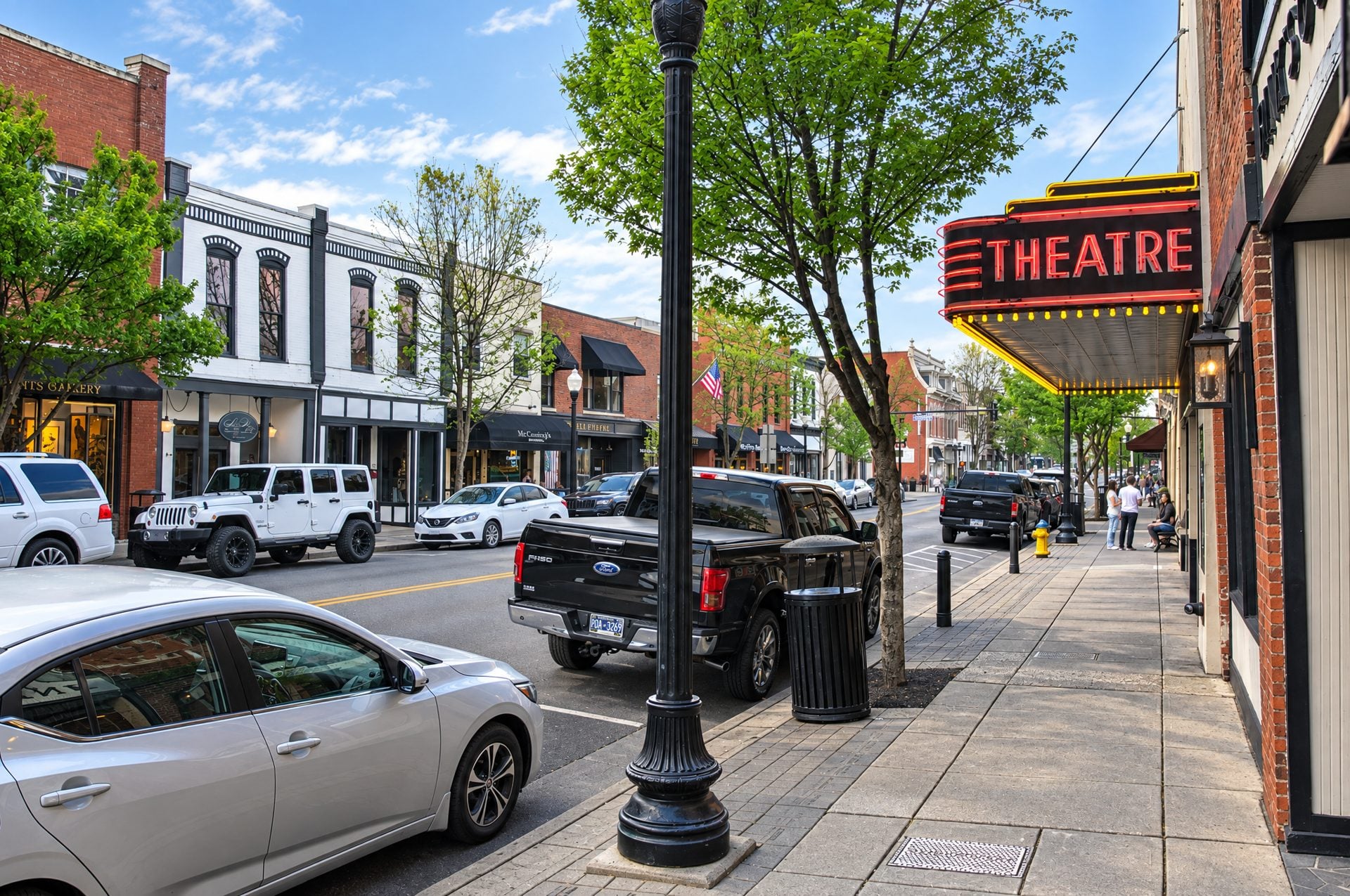
Header photo: Main Street in downtown Franklin, by Kimo Quance.
Frequently Asked Questions
How much can a seller pay in closing costs in Tennessee?
It depends on your loan type. The limits come from the loan program, not from Tennessee law. FHA and USDA cap it at 6 percent of the sales price, VA caps it at 4 percent of the home's reasonable value, and conventional loans cap it at 3, 6 or 9 percent depending on your loan-to-value ratio.
What is the FHA seller concession limit?
6 percent of the sales price, per HUD Handbook 4000.1. It covers your origination fees, other closing costs, prepaid items and discount points. Real estate commissions the seller customarily pays under local custom are not counted against it.
What is the VA seller concession limit?
4 percent, per the VA Lender's Handbook. Normal closing costs and market-rate discount points are generally handled outside that 4 percent. Ask your lender to confirm exactly what counts for your file.
What is the conventional loan seller concession limit?
3 percent if your loan-to-value is above 90 percent, 6 percent from 75.01 to 90 percent, and 9 percent at 75 percent or below, per Fannie Mae and Freddie Mac. Investment properties are capped at 2 percent regardless of loan-to-value.
What is the USDA seller concession limit?
6 percent of the sales price, per 7 CFR 3555.102(h). If an offer goes over it, your lender will need the concession brought back under the cap.
Is a seller concession the same as a price reduction?
No. A price reduction lowers the sales price itself. A concession keeps the price the same and has the seller pay money toward your costs, usually closing costs or prepaids. They affect your appraisal and your loan-to-value calculation differently.
Does a rate buydown count as a seller concession?
Yes. A seller- or builder-paid temporary or permanent rate buydown is a financing concession and draws from the same capped amount as closing-cost help.
Can a builder's incentive package count against the limit?
Yes. Builders and developers are treated as interested parties under these rules, the same as a resale seller, so builder incentives on new construction count toward the same percentage cap.
Negotiating a concession into your next offer?
If you're writing an offer in Thompson's Station, Spring Hill or Franklin and want to know exactly what a seller or builder can actually cover on your specific loan, reach out by DM, text, or call me at 615-392-1186. I'll walk through your loan type and your numbers with you before you submit.
Check out this article next