


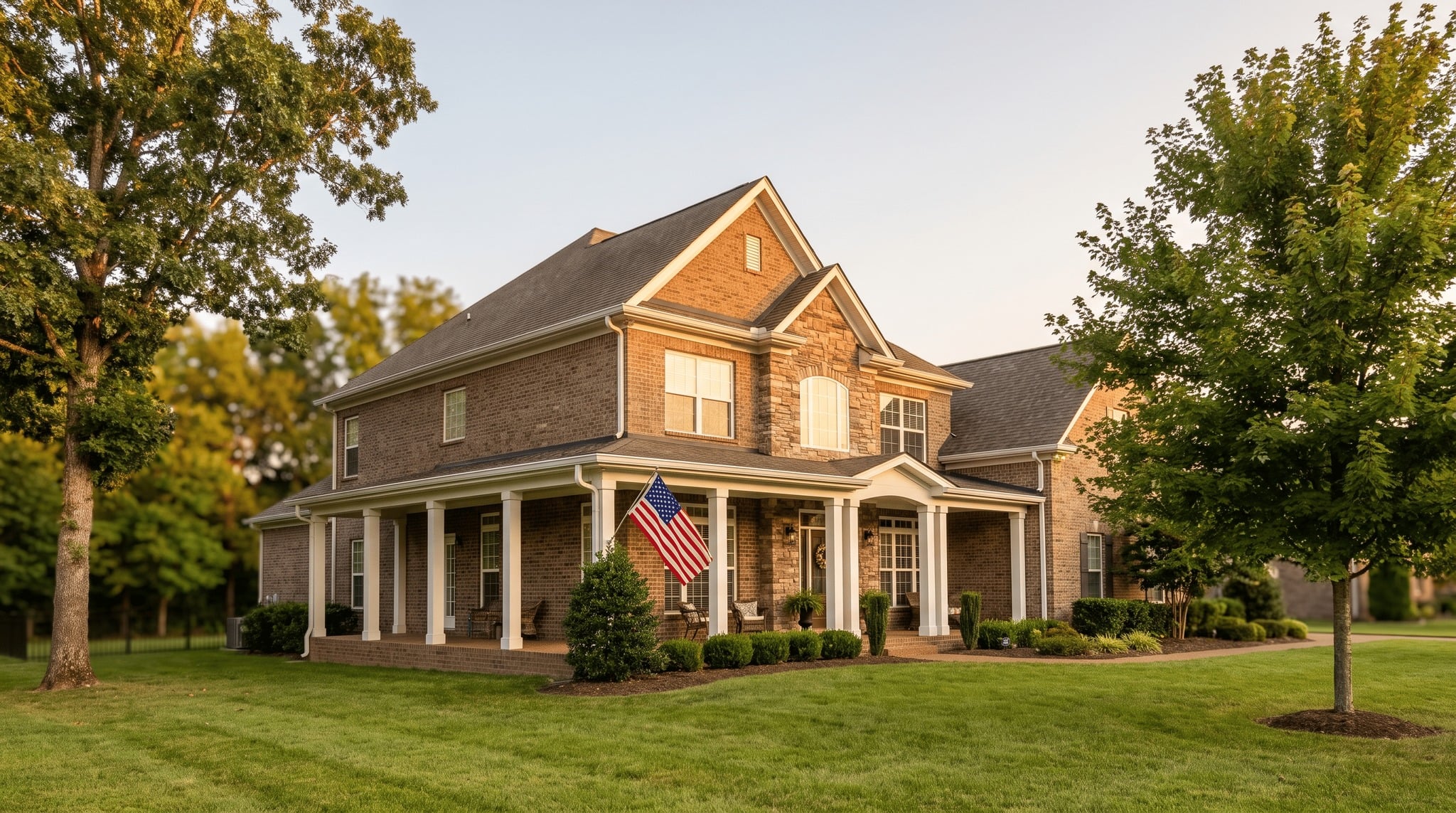
If you're a disabled veteran who owns a home in Williamson County, here's the part nobody tells you upfront: Tennessee doesn't erase your property tax bill. It reimburses part of it. That's a real difference, and it matters more here than almost anywhere else in the state, because Williamson County home values are some of the highest in Tennessee.
If you served, got hurt doing it, and now own a home in Franklin, Brentwood, Spring Hill, Thompson's Station, or anywhere else in Williamson County, this program can put real money back in your pocket every year. You just need to understand how it actually works so you don't leave money on the table, and so you don't walk into the Trustee's office expecting a zero-dollar tax bill that isn't coming.
What Is Tennessee's Disabled Veteran Property Tax Relief Program?
Tennessee's disabled veteran property tax relief is a state-funded reimbursement that covers the property tax on the first $175,000 of a qualifying veteran's home value, with no income limit. It's authorized under state law (T.C.A. § 67-5-704) and administered through your County Trustee's office, not your assessor. The Tennessee Comptroller's Property Tax Relief page lays out the statewide program in full.
Notice the word "reimbursement." Tennessee calls this property tax relief, not an exemption, and that wording matters. You still get a full tax bill every year, and you're still responsible for paying it.
In your first year, you pay your tax bill in full, then submit your application along with the paid receipt. If approved, the state mails you a refund. In every year after that, you'll receive a voucher with your tax bill showing the amount the state is covering, and you pay only the remaining balance. It's a reimbursement system, not an automatic discount at the register.
Who Qualifies for Tennessee's Disabled Veteran Property Tax Relief?
To qualify, you need a discharge other than dishonorable, plus one of the following:
- A service-connected permanent and total disability rating from the VA
- Permanent paralysis of both legs and the lower body from a service-connected spinal cord or brain injury
- Loss, or loss of use, of two or more limbs from a service-connected injury
- Legal blindness from a service-connected injury
- A 100% permanent and total disability rating resulting from being a prisoner of war
The state's official disabled veteran property tax relief page lists these categories in full.
Here's the part that surprises a lot of veterans: there's no income limit on this benefit. The state's elderly and disabled homeowner tax relief program caps household income (a limit that adjusts most years), but that cap doesn't apply to disabled veterans or their surviving spouses. If you qualify on disability status, your income doesn't disqualify you.
The relief also extends to an unremarried surviving spouse who solely or jointly owns the home and uses it as their primary residence, including spouses of service members whose deaths were combat-related.
How Much Does the Veteran Property Tax Benefit Save in Williamson County?
This is where Williamson County homeowners need to pay close attention. The state calculates your relief based on the first $175,000 of your home's full market value, and that cap hasn't moved in a long time.
The median Williamson County home now sells for nearly $1 million, and the average sale price runs higher still, well over $1.3 million, pulled up by Franklin, Brentwood, and higher-end Thompson's Station sales. So if your home is worth $1 million, the state's relief is calculated on roughly one-sixth of its value. You'll still owe property tax on the remaining balance. Even in more moderately priced pockets like parts of Spring Hill, most homes clear the $175,000 cap several times over. This program is meaningful help toward your annual bill. It is not a path to a zero-dollar tax bill in this market, and any veteran told otherwise is being set up for a disappointing surprise at the Trustee's office.
The exact dollar amount you receive depends on your property's assessment and the current county and city tax rates, which are set annually. Your County Trustee's office can tell you the current year's figure for your specific property.
How Do I Apply for Veteran Property Tax Relief in Williamson County?
Apply through the Williamson County Trustee's Office, and gather these before you go:
- Your VA disability rating letter showing your percentage and effective date, or documentation of POW status
- Your DD-214
- Proof of home ownership, such as your deed or a prior tax bill
- Proof of identity and current address
You'll typically apply after you receive your tax bill for the year. Tennessee's general rule for the Property Tax Relief Program sets the application deadline around 35 days after your tax bill's due date, but county timing can vary, so confirm the exact date with the Trustee's office directly rather than assuming.
Once you're approved, relief generally continues through an annual voucher, though the Trustee's office may periodically ask you to reverify your VA disability status. Don't assume you're locked in forever without checking.
What Other Tax Breaks Can Disabled Veterans in Tennessee Claim?
Property tax relief is one piece. I've put together a full resource for veterans and active-duty buyers and sellers in Middle Tennessee covering VA loans, relocation, and selling. While you're already gathering paperwork, ask about Tennessee's motor vehicle privilege tax exemption, often called the wheel tax exemption. Veterans with a 100% permanent and total disability rating, and former prisoners of war, can qualify for exemption from the county motor vehicle privilege tax and a free specialty license plate.
One important distinction: that vehicle benefit is handled through your county clerk, while your property tax relief goes through the Trustee. They're two separate offices. Veterans get sent back and forth all the time because they show up at the wrong counter, so plan to make both stops.
Key Takeaways
- Tennessee's disabled veteran property tax program reimburses part of your bill on the first $175,000 of your home's value. It does not eliminate your bill, especially in a high-value market like Williamson County.
- There's no income limit for disabled veterans or their surviving spouses, unlike the state's elderly and disabled homeowner tax relief track.
- You apply through the Williamson County Trustee's Office with your VA disability letter, DD-214, and proof of ownership, and the deadline generally falls about 35 days after your tax bill is due.
Frequently Asked Questions
Does the Tennessee disabled veteran property tax program eliminate my property taxes in Williamson County? No. It reimburses tax on the first $175,000 of your home's market value. In a market where the median home sells for nearly $1 million, that's real help, but you'll still owe tax on the rest.
Is there an income limit to qualify as a disabled veteran for this benefit? No. Unlike Tennessee's elderly and disabled homeowner tax relief program, there's no income limit for a qualifying disabled veteran or their surviving spouse.
Where do I apply for veteran property tax relief in Williamson County? You apply directly through the Williamson County Trustee's Office. Bring your VA disability rating letter, DD-214, and proof of home ownership.
Can a surviving spouse keep this benefit after a disabled veteran passes away? Yes, as long as the surviving spouse doesn't remarry, owns the home solely or jointly, and uses it as their primary residence.
Do I have to reapply every year for this tax relief? After your first approved year, you'll typically receive an annual voucher, though the Trustee's office may periodically ask you to reverify your VA disability status. Confirm your renewal requirements directly with the Trustee's office.
Here's what I'd tell any veteran in Williamson County sitting on this benefit and not using it: money you're owed and don't collect is money you gave away for nothing. If you want help figuring out exactly what this looks like on your specific home, or you're weighing whether now's the time to use your equity for a different move entirely, call or text me at 615-392-1186. I'm a Coast Guard veteran myself, and helping veteran families make smart moves on their homes is personal to me, not just business. Whatever your next move looks like, buy or sell your house on your terms.
Check out this article next