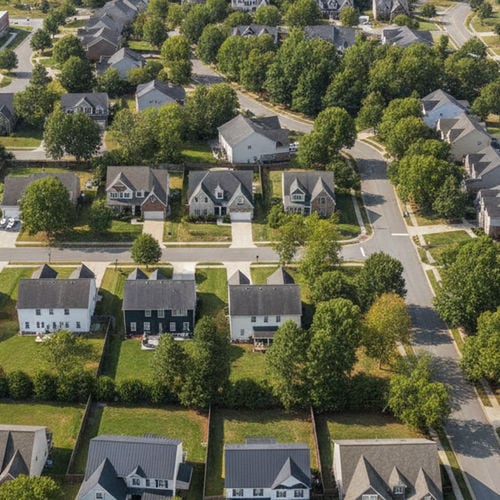


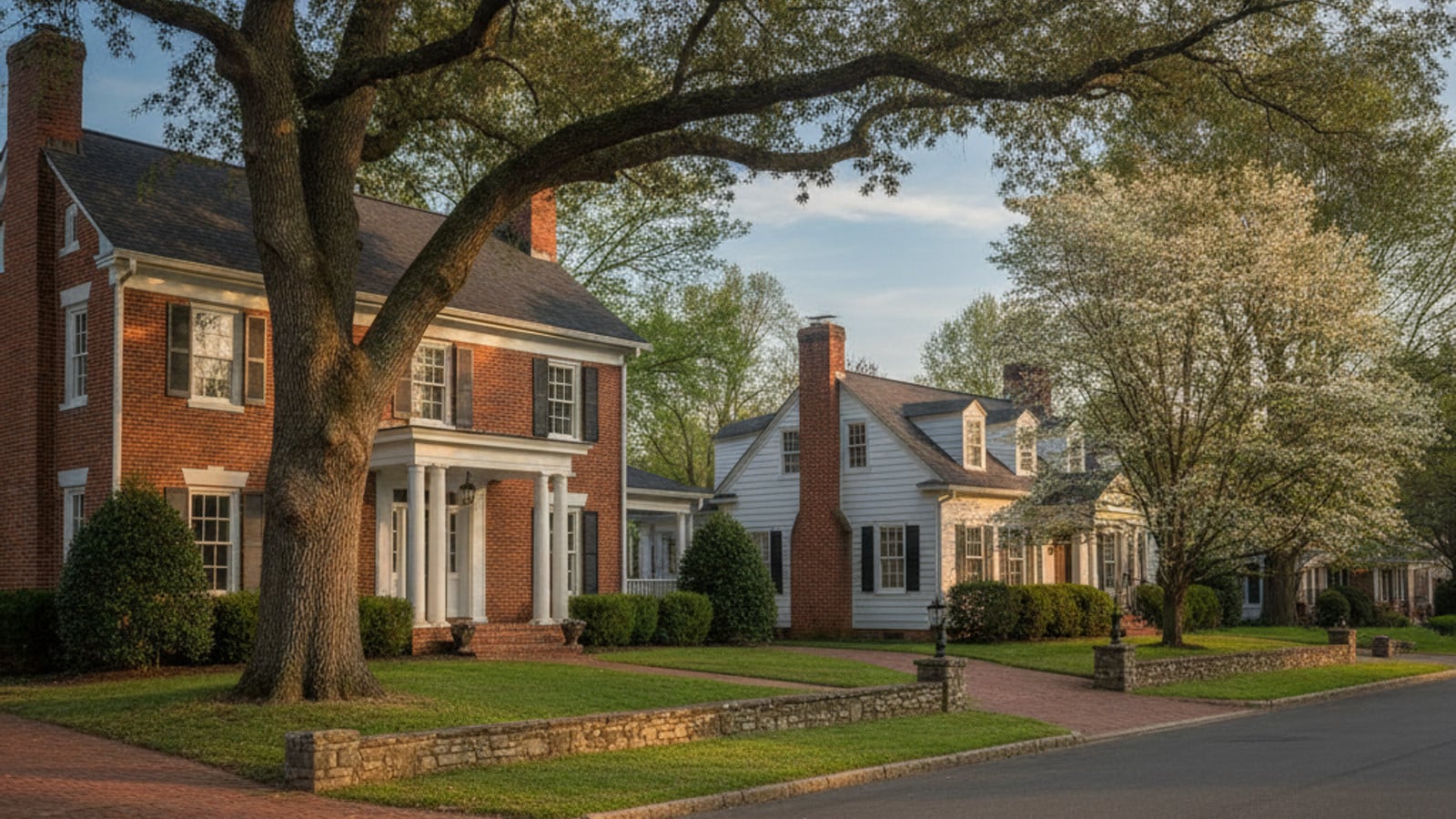
Thompson's Station sits in Williamson County, about 25 miles south of Nashville, rural and quiet, wedged between Spring Hill to the south and Franklin to the north. Living in Thompson's Station means settling in the kind of place where the land still looks like it has a memory.
If you're considering buying here, you're probably already sensing that. That starts with knowing the place.
A Quick Look at the Area's Background
The first recorded settler was Edward Swanson, who staked a land claim in 1780. Native American conflicts pushed him out not long after, but a second wave arrived in 1798 and put down roots that held.
That 1798 group included Rebecca Green Neely, the first woman to cross the Harpeth River, along with her husband George and son James. The Giddens and Buford families followed, and what emerged was a tight farming community that would define the area's character for the next two centuries.
Is Thompson's Station a City or a Town?
It's a town, officially. Thompson's Station incorporated in August 1990, which sounds recent, but by that point it had already been operating as an unincorporated community for well over a hundred years. The push to incorporate was largely about local control: growth was coming, and residents wanted a seat at the table on zoning and development rather than leaving those decisions to the county.
Location Details and County Boundaries
Thompson's Station falls entirely within Williamson County, Tennessee, and it's considered part of the broader Nashville metropolitan area. That positioning matters practically. You get genuine access to Nashville without living in Nashville's backyard.
Franklin is directly to the north; Spring Hill is directly to the south. Most people moving to Thompson's Station are making a deliberate choice about that geography.
Proximity to Surrounding History
The historical density in this part of Williamson County is worth understanding. Franklin has the Carter House and the Lotz House Museum, both significant sites tied to the Battle of Franklin. Spring Hill offers a self-guided battlefield driving tour that draws steady visitor traffic.
Thompson's Station has its own historical footprint, substantial, as you'll see, but if Civil War history is something you care about, you're moving into a county that takes it seriously.
How the Town Got Its Name
The community didn't arrive at "Thompson's Station" on the first try. Early residents called it White House. Then in 1836 it was renamed Littlebury, most likely in reference to the local postmaster at the time, Littleberry Starks.
That name held for twenty years.
The Shift to Thompson's Station
The railroad changed things. When it arrived in 1856, Dr. Elijah Thompson donated land for the village and a new train depot. The town was officially named and platted as Thompson's Station in his honor. The depot became a central shipping hub for the surrounding agricultural community almost immediately, which tells you how much the railroad meant to a farming region in the mid-19th century.
Founding Timeline and Early Settlement
From Edward Swanson's 1780 land claim to the permanent settlers of 1798, the early history of this area is one of persistence. Families built farms and established an agrarian community through the early 1800s, and it functioned that way, loosely organized, rurally focused, until Dr. Thompson's 1856 land donation gave it a defined center.
The railroad connection that followed brought commerce and population growth. What had been a scattered collection of farms became a recognized village with a name, a depot, and a reason for people to pass through.
Modern Incorporation
The community went over 130 years after receiving its name before formally incorporating. When residents finally pushed for it, the goal was straightforward: local control over zoning and development as regional growth crept closer from both Franklin and Spring Hill. That effort resulted in the August 1990 incorporation of Thompson's Station as a town. Local governance today is still oriented around the same tension, new residential development on one side, historical preservation on the other.
Historic Landmarks and Battlefield Sites
Homestead Manor is the landmark most people point to first. Francis and Mary Giddens began building it in 1799, a three-story, nine-room house that's survived everything the county has thrown at it, including the Civil War. During the Battle of Thompson's Station, the Thompson family sheltered in the basement of Homestead Manor. That's not a footnote; that's the building holding its ground through one of the most chaotic days this town ever saw.
Preservation Park
Preservation Park covers 200 acres of the former battlefield. The town maintains it with trails and battlefield markers that walk you through what happened during the Civil War conflict on that ground. It functions as both a recreational space and an outdoor educational site, and honestly, walking it gives you a better sense of the town's scale and character than any listing description will.
What Thompson's Station Is Known For Today
The Battle of Thompson's Station, March 5, 1863. That's what put this town on the historical map. Confederate forces under Gen. Earl Van Dorn and Nathan Bedford Forrest defeated Union troops commanded by Col. John Coburn, capturing over 1,200 Union men in the process.
Beyond the battle, the town's identity is built on two things: its history as a railroad shipping center, and a rural atmosphere that's managed to survive the growth pressure surrounding it.
Local Figures and Heritage
The historical figure most people land on is Alice Thompson, the 17-year-old daughter of Dr. Elijah Thompson. During the 1863 battle, she rallied the 3rd Arkansas Regiment, an act that's remained a well-documented piece of local lore ever since. There's no long list of modern celebrities with roots here. The town's identity runs through its history, not its current fame, and most buyers who end up here seem to understand that distinction.
Frequently Asked Questions
What are the oldest historic neighborhoods to buy a home in Thompson's Station, TN?
The oldest homes cluster near the original 1856 village center and train depot area. The 1799 Homestead Manor anchors the early settlement period as a reference point. If you're specifically hunting historic properties, focus your search around the town's central core.
Are there strict preservation rules or zoning laws for renovating historic homes in Thompson's Station?
Yes. Properties within designated historic areas or tied to the original town center are subject to specific local zoning rules, and part of why Thompson's Station incorporated in 1990 was precisely to manage that kind of development. Before you touch anything on a historic property, talk to the local municipal office first.
Are there building restrictions for new construction near the historic battlefield areas in Thompson's Station, TN?
Yes. The town actively protects its historical sites, including the 200-acre Preservation Park on the former battlefield. New construction near those protected zones falls under local zoning oversight, and builders have to follow town guidelines when developing near the markers.
Do homeowners qualify for tax breaks or grants when restoring historic properties in Thompson's Station?
It depends on the property's specific designation. Some historic properties may qualify for state or federal preservation tax incentives, but local municipal grants vary. Check with Williamson County tax authorities to find out what actually applies to your property.
How do property values of historic homes in Thompson's Station compare to newer construction?
Historic properties tend to command a premium, rarity and distinctive architecture carry weight in a market like this one.
What is the process for getting a Thompson's Station property officially listed on the historic register?
You'll need to submit an application detailing the home's historical significance, ties to early settler families like the Giddens or Bufords would be relevant examples. State historical commissions review those applications for potential inclusion on the National Register of Historic Places.
Check out this article next