


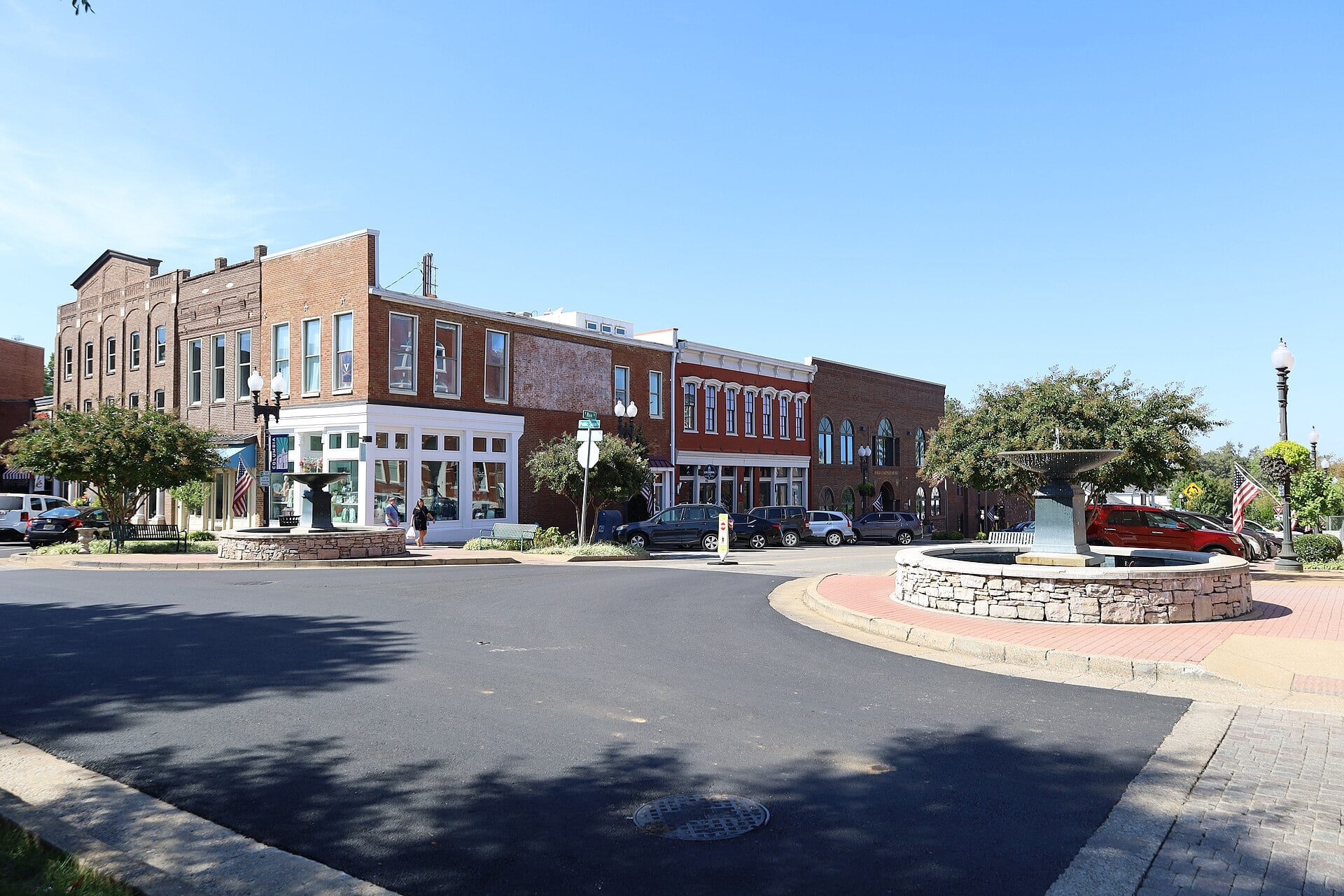
Header photo: Public Square, Columbia, by Antony-22, CC BY-SA 4.0, via Wikimedia Commons. Resized.
Quick answer (as of October 2026): A VA compromise sale is the older name for a short sale on a VA-guaranteed loan. You sell the home for less than you owe, and your servicer releases its lien in exchange for the sale proceeds. Under VA's rule, the servicer can approve it without asking VA first when the loan can't be saved, the amount credited to your debt at least equals VA's net value of the home, and you take no money from the sale. VA then pays the servicer's claim, and you'd need to repay that loss to VA to get your full home loan entitlement back.
You used your VA benefit to buy the house. Now the payment doesn't work, the house won't sell for what you owe, and you're wondering whether you've just used up the one home loan benefit you earned.
I'm a Coast Guard veteran, and I sell real estate in Franklin, Thompson's Station, Spring Hill and the rest of Williamson and Maury counties. Below is what VA's own rules say about a short sale on a VA loan, who signs off, what it does to your entitlement, and what I do on the file. If you're still deciding whether to sell at all, start with your options when you owe more than the home is worth.
What is a VA compromise sale?
A VA compromise sale is a short sale of a home with a VA-guaranteed loan: a sale to an unrelated buyer for less than the total you owe, where the servicer agrees to release the lien in exchange for the sale proceeds.
VA used to call it a compromise sale. Its servicer handbook switched to the term "short sale" in May 2024, so you'll see both. The claim your servicer files with VA afterward is the compromise claim. VA's 2011 circular on relocation money used both terms together: "a short sale with VA compromise claim."
VA's homeowner page says that if you owe more than the house is worth, your servicer might agree to accept the total proceeds of the sale as full payment of the mortgage debt.
Who approves a short sale on a VA loan?
Your servicer approves it, in most cases without asking VA first. Federal regulation lets the loan holder approve a VA short sale on its own when three things are true:
- The holder has decided the loan is insoluble, meaning it can't be brought current.
- The amount credited to the debt, which is the net sale proceeds plus anything the holder waives, equals or exceeds the net value of the home.
- The current owner receives no proceeds from the sale.
Net value is VA's own number. The holder takes the home's fair market value and subtracts VA's estimated costs to acquire and resell it. An offer that clears that line can be approved by the servicer. One that doesn't can still go to VA for advance approval if the holder believes the sale is in the best interest of both you and VA.
VA also gets involved when the loan carries an outstanding VA Partial Claim. Its June 2026 handbook update added rules for those loans. If your servicer ever gave you a partial claim to catch up missed payments, tell me on the first call.
Where does a short sale fit in VA's foreclosure prevention rules?
A short sale is one of two VA alternatives to foreclosure. The other is a deed in lieu, where you sign the home over to the servicer. VA's other options, a repayment plan, special forbearance, a loan modification or a VA Partial Claim, are built to keep you in the house.
VA replaced its old home retention waterfall with a new VA Loss Mitigation Waterfall that went live June 15, 2026. It sets the order a servicer works through those options. If you want to keep the house, ask the servicer which of the retention options you're being reviewed for before you list. If you've decided to sell, tell the servicer in writing so the file moves toward a sale.
The same June 2026 update replaced the word "Veteran" with "borrower" throughout the chapter, because these options aren't tied to Veteran status. If you took over a VA loan by assumption, the same servicing rules apply to you.
Do you qualify for a VA short sale?
You likely fit the profile if the home has little or no equity, you can't catch up the payments, and a buyer's offer can meet VA's net value. VA's handbook describes a short sale as the option to consider when a regular sale isn't workable because there's little or no equity.
You can't walk away with cash from the sale, because the owner can't receive proceeds. VA does let servicers advance $1,500 in relocation assistance to borrowers living in the home who complete a short sale. Ask your servicer what it takes to receive it.
Don't miss payments on purpose to get here. If you're current and worried, call your servicer and a VA loan technician first. VA's number for loan technicians is 877-827-3702.
How is a VA short sale different from an FHA or conventional short sale?
The biggest differences are who sets the price floor and what you can receive.
| VA loan | FHA loan | Fannie Mae loan | |
|---|---|---|---|
| Who approves | Your servicer, under 38 CFR 36.4322(e), or VA in advance when the conditions aren't met | Your servicer, under HUD's Pre-Foreclosure Sale program | Your servicer, with a valuation ordered from Fannie Mae |
| Price floor | VA's net value: market value minus VA's estimated costs to acquire and resell | 88, 86 or 84 percent of the as-is appraisal, depending on how long it's been marketed | Fannie's valuation; an offer at or above its suggested list price isn't automatically approved |
| Money to the owner | No sale proceeds; servicer may advance $1,500 relocation assistance | Up to $3,000 owner-occupant compensation, which can also go toward junior liens | $7,500 relocation assistance for a principal residence, with exceptions |
| The rest of the balance | VA describes the servicer accepting the proceeds as full payment | HUD's definition includes forgiving the deficiency | Deficiency release on loans without mortgage insurance, or with delegated insurance |
The mechanics of listing, the offer and the lender's paperwork are close to the same across all three. I walk through them in the short sale process, step by step.
What does a VA short sale do to your VA entitlement?
It can tie up part of it. VA's answer: if your loan ends in foreclosure, short sale or deed in lieu, you'll need to pay back the amount VA lost on your loan to restore your future benefit, a process VA calls restoration of entitlement. VA's homeowner page says the same thing more briefly: a short sale could result in a loss or reduction of your future home loan benefit.
That doesn't always mean you can't use a VA loan again. If you don't have full entitlement, your remaining bonus entitlement is based on the county loan limit minus what you've already used, and your Certificate of Eligibility shows prior loans charged to your entitlement. To find out what you'd need to repay to restore it, call a VA loan technician at 877-827-3702.
How long you'd wait for a new VA loan after a short sale is a lender underwriting question, and lenders can add requirements of their own. Ask a VA lender before you choose a path.
Will you owe the rest of the balance after a VA short sale?
On the first mortgage, VA describes the short sale as the servicer accepting the sale proceeds as full payment of the debt. Federal law also says that on a VA loan closed after 1989, where the funding fee was paid or waived, you have no liability to VA for a loss caused by your default, except in a case of fraud, misrepresentation or bad faith. There are exceptions in that statute, and your servicer's approval letter is the document that governs your file, so have a Tennessee real estate attorney read it before you sign.
A second mortgage or HELOC is a separate debt with its own lender and needs its own release. I cover that in second mortgages, HELOCs and deficiency in a Tennessee short sale.
Forgiven debt can also be a tax question. The IRS says canceled debt is generally taxable unless an exclusion applies, and its exclusion for a main home covers debt discharged before January 1, 2026, or under a written arrangement entered into before that date. Talk to a tax professional before you close.
Tax figures on this page are the federal rules as published for 2026 and are for planning only. I am a licensed Realtor (TREC 369038), not a tax professional or a lender. Confirm your own situation with a CPA, and any borrowing limit with your lender, before you rely on a number.
What does your agent do on a VA short sale?
I price the home against what the market and the servicer's valuation will support, list it, get on the account with your third-party authorization, collect offers, build the package the servicer asks for, and push the file until there's a written approval and a closing date. My pay is the commission, paid at closing as part of the approved sale.
My two most recent short sales were in Columbia, in Maury County, and both were FHA loans, not VA. The work on a VA file is the same work, done against a different rulebook. With my first Columbia seller, I was at the house the day after the first call, and the seller, the servicer's loss mitigation line and I were on a three-way call so the servicer would talk to me. On the second file, I called the servicer every week or two and logged every call. Both sellers brought $0 to closing.
What should you do first?
- Find your latest mortgage statement and anything else secured by the house: a second mortgage, a HELOC, HOA dues.
- Ask me what the house is worth today. That one number tells you whether you're in short sale territory.
- Call your servicer's loss mitigation department. Ask which options you're being reviewed for, and whether you have an outstanding VA Partial Claim.
- Call a VA loan technician at 877-827-3702 about your options and your entitlement.
- Put the legal questions with a Tennessee real estate attorney and the tax questions with a tax professional.
- If a foreclosure sale date is already set, read Can You Sell a House in Foreclosure in Tennessee? and call me today.
Not sure a short sale beats your other options? See short sale vs foreclosure in Tennessee, and if you have a low-rate VA loan, a buyer may be able to take it over: here's how assumable mortgages in Middle Tennessee work. The full picture is in my Tennessee short sale guide, and my veteran services are on the veterans page.
Frequently asked questions
What is a VA compromise sale?
A VA compromise sale is a short sale on a VA-guaranteed loan: the home sells to an unrelated buyer for less than you owe, and the servicer releases its lien in exchange for the sale proceeds. VA's servicer handbook has used the term "short sale" since May 2024.
Does VA have to approve a short sale on a VA loan?
Usually not in advance. The servicer can approve it on its own when the loan is insoluble, the amount credited to the debt at least equals VA's net value of the home, and the owner receives no proceeds. If those conditions aren't met, the servicer can ask VA for advance approval.
Can I get money from a VA short sale?
Not from the sale proceeds. VA's rule says the current owner can't receive any. VA does let servicers advance $1,500 in relocation assistance to borrowers living in the home who complete a short sale, so ask your servicer what it takes to qualify.
Will a VA short sale affect my VA entitlement?
It can. VA says that after a foreclosure, short sale or deed in lieu, you need to repay the amount VA lost to restore your full entitlement. You may still have remaining entitlement in the meantime. Call a VA loan technician at 877-827-3702 for your numbers.
Can VA come after me for the balance after a short sale?
On a VA loan closed after 1989 where the funding fee was paid or waived, federal law says you have no liability to VA for a loss from your default, except in a case of fraud, misrepresentation or bad faith. A second mortgage is a separate debt. Have a Tennessee real estate attorney read your approval letter.
How long do I have to wait for a new VA loan after a short sale?
VA's servicing rules don't answer that. Your next lender's underwriting does, and lenders can add requirements of their own. Ask a VA lender before you choose a path, and ask VA what it would take to restore your entitlement.
If you've got a VA loan and the numbers don't work anymore, send me your latest mortgage statement and I'll tell you what step one looks like for you. DM, text, or call me at 615-392-1186.
Check out this article next