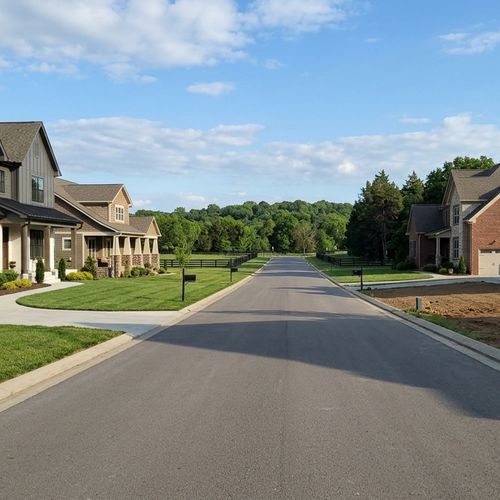


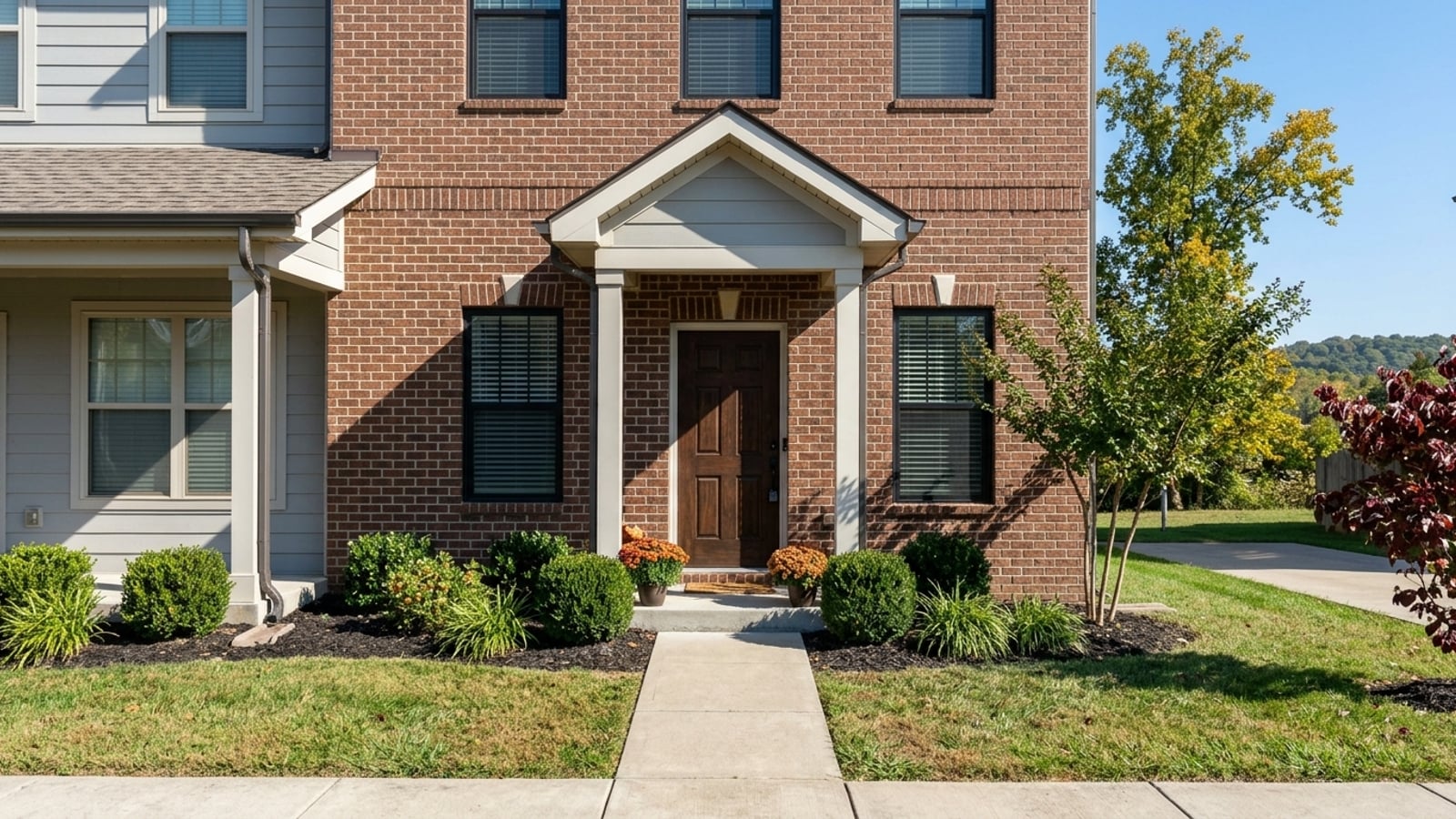
The median sale price for a home in Thompson's Station, TN, sits around $833,246. When you buy into a managed community here, the monthly dues change the actual cost of ownership.
Comparing properties means looking at both the purchase price and the monthly association fee. The property type you choose dictates what maintenance you handle yourself and what you hand off to the association.
Key takeaway
In Thompson's Station, HOA dues matter most on townhouses and condos because they pay for parts of the home itself. Townhouses still deliver the most space per dollar after dues. If you'd rather keep dues limited to shared amenities, single-family homes are where sellers are giving the most ground right now.
Who this guide is for
You're looking at a Thompson's Station home that comes with an HOA and need to know what the dues pay for and whether they make a townhouse, condo, or single-family home the better buy.
How homeowners associations operate in Thompson's Station
HOA dues on townhouses and condos pay for parts of the home itself. On single-family homes, they pay for shared amenities. Tollgate Village condo dues have covered insurance, water, sewer, and trash. Saddlewalk at June Lake, a single-family community, uses dues to fund a pool, fitness center, and trails. Two different things entirely.
The most useful question to ask is what the dues replace. On that basis, townhouses still win on cost per square foot, even after factoring in the monthly dues at The Townes at Whistle Stop. Condos require a longer horizon because they take a median 311 days to sell.
Any monthly figure also hides two variables: reserve funds and special assessments. A low monthly rate only helps if the association holds enough in reserve to cover major repairs without suddenly billing owners a large one-time assessment. That's worth weighing carefully against the specific property types available here.
Comparing dues across different property types
Attached homes group exterior upkeep under a shared budget. Detached homes leave the structure entirely to you. That single distinction drives most of the differences you'll see when comparing monthly fees across property types.
A lower purchase price might come with higher monthly dues. A higher purchase price might mean lower dues but every repair on your dime.
Townhouses
Townhouse HOAs typically cover exterior and grounds maintenance, buying back your time and absorbing some repair costs. Townhome prices jumped 21.2% year over year to a median of $633,758, though that figure comes from just 12 sales over a recent 90-day period. With that low a sample, the price jump likely reflects which specific units sold rather than any broad market shift.
Townhouses offer the cheapest space per square foot of any home type in this market, beating both single-family homes and condos. The risk is that prices could keep moving, narrowing that per-foot edge, and the monthly dues come on top of your mortgage either way.
Condos
The median sale price on condos here is roughly $412,408 based on 10 recent sales, making them the lowest-priced entry point. Dues can cover the physical structure, master insurance, and some household utilities. Condos sell at about full asking price, but they move slowly: a median 311 days to close.
That timeline means carrying roughly 10 months of dues and mortgage payments while your unit sits on the market. If you think you might sell within a few years, budget for nearly a year of carrying costs. And before you assume what dues cost, ask the HOA for its current figure and any planned increases.
Single-family homes
Single-family HOAs here generally fund amenities, common areas, and community infrastructure, not your roof or insurance. Single-family prices fell 4.7% over the past year to a median of $905,389, and supply sits at an ample 6.4 months based on 58 recent sales. That gives you more room to negotiate than any other property type, including the option to ask the seller to cover one-time HOA closing costs.
The tradeoff is straightforward: you pay monthly dues and still carry every exterior repair, roof replacement, and insurance premium yourself. The dues are purely for shared amenities you may or may not use.
Fees and coverage at specific local communities
Looking at specific communities gives you a clearer picture of what you pay and receive. Only one community listed below has a confirmed current dollar figure, so you'll need to request the current dues for the rest before making an offer.
Always verify what the dues cover in writing. Coverage lists can change, and assuming a fee handles your exterior or insurance can lead to expensive surprises after closing.
The Townes at Whistle Stop (Whistle Stop Farms)
Townhome dues at The Townes at Whistle Stop were $290 a month per a listing that sold in May 2026. This is the only community on this page with a confirmed recent fee amount.
The listing doesn't say exactly what that fee covers. Ask the HOA whether exterior maintenance, roof replacement, insurance, or trash are included before you compare it with anything else, and check the HUD list if you plan to use an FHA loan.
Tollgate Village
Tollgate Village condo dues have covered water, sewer, and trash, plus building insurance, per an earlier MLS listing for the Town Center condos along Branford Place and Tollgate Boulevard. Those are bills that owners would otherwise pay separately, which makes this a clear example of dues replacing household expenses. The town also recently held a parking plan and traffic calming drop-in for this neighborhood, so street parking falls under both town rules and HOA rules.
No recent dues figure is confirmed here. Request the current amount, confirm the coverage list hasn't changed, check FHA approval if needed, and review the town's parking plan if street parking matters to you.
Cherry Glen Condominiums
The Cherry Glen Condominiums fee covers exterior maintenance and grounds upkeep, per a listing active since early 2026. That handles outside work but leaves out utility coverage.
Neither the fee nor an MLS number is confirmed, and the coverage listed doesn't mention insurance or utilities. Ask whether the HOA carries a master insurance policy, what you'd insure yourself, and whether the project is FHA approved.
Saddlewalk at June Lake
Saddlewalk at June Lake is a useful single-family comparison. Its HOA dues fund an amenity campus with a pool and fitness center, plus greenway trails and community infrastructure, per an active MLS listing. That's precisely what amenity-style dues buy in a detached-home neighborhood.
The fee on that listing is more than a year old and isn't confirmed. You pay for the amenity campus whether or not you use it, none of it covers your own house, and FHA eligibility still needs to be confirmed if you're financing with that loan type.
Adding monthly dues to your purchase price
Townhouses sit at a median $273 per square foot. Single-family homes cost about $317 per square foot. That $44 gap saves a buyer roughly $88,000 on the purchase price of a comparable 2,000-square-foot townhouse.
The confirmed fee at The Townes at Whistle Stop equals $3,480 a year. At that rate, it takes about 25 years of dues to equal the $88,000 purchase-price gap between a townhouse and a single-family home. These medians come from different homes, the townhouse figure rests on just 12 sales, dues rise over time, and this math excludes financing interest.
The comparison also ignores the exterior costs the association might absorb for you on attached homes. Monthly dues rarely erase the upfront purchase-price advantage, so judge them by what they cover. You can review affordability metrics and local cost of living details to plan your full monthly budget.
Judging whether an association fee is too high
There's no single local benchmark for a fair fee in Thompson's Station. You have to measure it against the services provided, because the dollar amount alone tells you very little.
A fee is generally too high if it fails to replace your out-of-pocket costs. A fee that looks low can be just as problematic if it leaves the community's reserves underfunded.
Write down what the dues replace
List each bill or job the dues cover: master insurance, water, sewer, trash, exterior repairs, grounds upkeep. Estimate what you'd otherwise pay for those services yourself, then compare that total to the monthly fee.
Skip this step and a low fee can look like a bargain simply because it covers less. Two fees are only comparable when their coverage lists match.
Review the budget and reserve study
Ask for the current budget, the most recent reserve study, and the percentage the reserves are funded. Under the Tennessee Nonprofit Corporation Act, members have the right to inspect corporate records, and industry guidelines recommend regular reserve studies to ensure adequate funding. Underfunded reserves are how a reasonable monthly fee turns into a massive special assessment.
Smaller associations may not have a recent reserve study at all. If none exists, treat that as a reason to ask more questions, not as a neutral fact.
Check for special assessments and fee hikes
Request a history of dues increases and any special assessments over the past several years, along with any planned or pending ones. Tennessee boards can typically raise regular dues without membership approval unless the governing documents say otherwise. A 2024 state law does require a two-thirds majority vote to levy a special assessment for nonessential amenities like pools.
Past increases don't guarantee future ones. The governing documents, not state averages, set how dues can change.
Verify rental, resale, and loan rules
Covenants can cap long-term rentals, restrict short-term rentals, or affect loan eligibility, including FHA condo approval. These restrictions directly affect resale value, which matters more here given the long resale times for local condos.
Rules can change by owner vote after you buy. Read the amendment process in the covenants, not just the current rules.
One-time association charges at closing
Monthly dues aren't the only association cost you'll encounter. At closing, buyers may face one-time charges that go directly to the HOA or its management company.
Single-family homes currently offer the most room to negotiate, so you have space to ask who pays these one-time fees. Reading the HOA documents before closing lets you identify these charges early and avoid surprises at the table.
Capital contributions
Some associations charge buyers a one-time capital contribution or initiation fee at closing to build up the reserve fund. Ask the HOA or the listing agent whether one applies and how it's calculated for the specific property.
The amount isn't published for any of the communities profiled here. This fee can catch you off guard late in the transaction if you don't ask early.
Document fees and resale certificates
When buying a condo, Tennessee law requires the association to provide disclosures that function like a resale certificate upon request, and they may charge a reasonable fee for this information. You should receive and review all HOA documents before the end of any review period. Sellers can check local disclosure requirements to prepare these files in advance.
Review deadlines in your contract can be short. If the documents arrive late, ask your agent about extending the review window before it expires.
Deciding on a community in Thompson's Station
Choosing the right property comes down to how you want to spend your money and your time.
If you want the association to handle exterior and grounds work, read the townhouse and condo profiles and look closely at Tollgate Village and Cherry Glen. If you could need to sell within a few years, review the condo profile's long resale timing before anything else, then compare townhouses, which move much faster. If you want the most space for your money and don't mind monthly dues, start with townhouses, including The Townes at Whistle Stop, because they offer the lowest median price per square foot. If you want dues that cover building insurance and household utilities rather than just grounds, look at Tollgate Village condos. If you want room to negotiate on price or have the seller pay one-time HOA costs, single-family homes offer the best opportunity. And if you'll use a pool, fitness center, and trails often enough to justify paying for them every month, explore Saddlewalk at June Lake.
Checking these details early protects your budget. Kimo Quance can request HOA documents on a specific listing before you commit. You can also review broader housing market trends and explore the best local neighborhoods to see how these communities fit into the wider area.
At a glance
- All homes: median sale price $833,246, up 1.7% year over year (80 sales, 90 days ending September 30, 2026)
- Single-family: median sale price $905,389, down 4.7% year over year; median $317 per square foot (58 sales, 90 days ending September 30, 2026)
- Single-family: 6.4 months of supply and 121 homes listed; median 60 days on market; 99% sale-to-list; 28.1% sold above list (90 days ending September 30, 2026)
- Townhouse: median sale price $633,758, up 21.2% year over year; median $273 per square foot (based on 12 sales, 90 days ending September 30, 2026; treat the change with caution)
- Townhouse: median 66 days on market; 98.5% sale-to-list; 8.3% sold above list; 4 months of supply; 16 listed (based on 12 sales, 90 days ending September 30, 2026)
- Condo: median sale price $412,408, flat year over year; median $324 per square foot (based on 10 sales, 90 days ending September 30, 2026)
- Condo: median 311 days on market; 100.3% sale-to-list; 20% sold above list; 4.4 months of supply; 15 listed (based on 10 sales, 90 days ending September 30, 2026)
- The Townes at Whistle Stop: $290 a month (May 2026 sale)
Thompson's Station HOA fee FAQs
Are HOA fees in Thompson's Station paid monthly or yearly?
It depends. The Townes at Whistle Stop listed its dues as a monthly amount, but the billing frequency is set by each association's governing documents. Confirm the exact billing schedule and the late-fee policy directly with the HOA.
Who pays the HOA transfer fee in Tennessee, the buyer or the seller?
The buyer typically pays, but it's negotiable. Under the standard Tennessee REALTORS purchase and sale agreement, the buyer is responsible for transfer fees and capital contributions, while the cost of the resale certificate is handled separately. Buyers currently have room to negotiate in the single-family market, so you can ask the seller to cover these costs.
Can a Tennessee HOA raise dues or charge a special assessment without a vote?
State law generally allows boards to increase regular fees without membership approval, meaning those limits depend entirely on the community's governing documents. The exception is a 2024 statute requiring a two-thirds member vote before a board can fund nonessential amenities, like a pool, through a special assessment. Read the bylaws' assessment section to confirm your voting rights, as this is a factual framework rather than legal advice.
Can an HOA foreclose on a home in Tennessee for unpaid dues?
Yes. Under the Tennessee Condominium Act of 2008, a condo association has a lien for unpaid assessments that can be foreclosed through judicial action or, if permitted, like a deed of trust. Single-family HOAs must draw their lien and foreclosure authority from their recorded declarations. This is a factual framework, not legal advice.
Are there homes in Thompson's Station with no HOA?
Yes. The listing's HOA field is a starting point, but recorded covenants are the official proof. You can confirm whether a property has recorded covenants by searching the Williamson County Register of Deeds records.
How do I check if a Thompson's Station condo is FHA approved?
Search the HUD FHA approved condominium list online by project name. FHA status is not confirmed for any community on this page. If the entire project isn't approved, ask a lender whether single-unit approval is an option.
Can I rent out a condo or townhome in a Thompson's Station HOA community?
It depends. The Town of Thompson's Station requires a permit and an annual fee for short-term rentals under 30 days. The community's covenants may also cap long-term rentals or ban short-term rentals regardless of town law.
Who sets parking rules in Tollgate Village, the town or the HOA?
Both. Public streets fall under the town, which recently deployed a neighborhood-specific parking plan and traffic calming measures to ensure emergency access. Private lots and common areas fall under the HOA, so ask the association for its parking rules and towing policy.
Tell me your price, area and beds, and new listings that fit get sent to you when they come on.
Or call 615-392-1186
Sources
- Redfin: Data Center
- Whistle Stop Farms Pha Sec7 listing #3169968 (sold 2026-05-28)
- Tollgate Village Ph2a listing #RTC3220492
- Saddlewalk at June Lake listing #3191448
- Tennessee REALTORS Purchase and Sale Agreement
- ManageCasa: HOA Management in Tennessee
- Tennessee Capitol: HB2401
- Williamson County Subdivision Regulations
- Town of Thompson's Station: Tollgate Village Parking Plan
- Town of Thompson's Station: Short Term Rental Ordinance
- Tennessee Attorney General: Opinion 08-164
- CAI: Reserve Study and Funding
- Tennessee Condominium Act Disclosures
Check out this article next