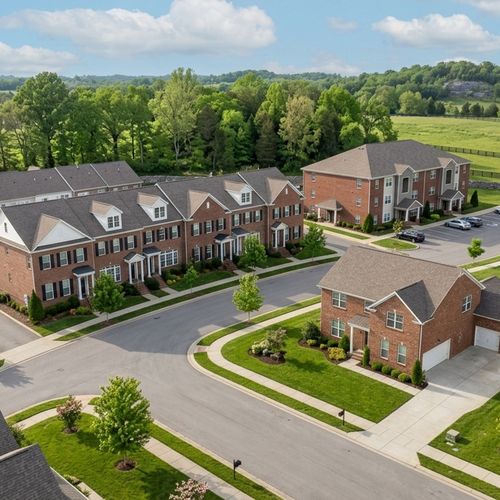


The median home sale price in Thompson's Station, TN sits at roughly $829,000. If you're planning a move here in 2026 as first-time home buyers in Thompson's Station, TN, the financing costs on a purchase that size will shape your monthly budget and your long-term financial picture more than almost anything else.
A home's sticker price is only part of the equation. The rate you lock in determines your true cost of ownership - it touches everything from your daily cash flow to the final return you see when you eventually sell. The more clearly you understand how these numbers work, the better you'll be positioned when it's time to make a move.
How Today's Mortgage Rates Are Set in Thompson's Station
National economic indicators drive the baseline for borrowing costs. Bond markets, inflation data, and Federal Reserve policy decisions push these figures up or down on a daily basis - sometimes by the hour.
The headline numbers you see on financial news sites are built for a flawless borrower. Your actual rate will differ based on your credit profile, your income, and the type of property you're buying.
Where to Find Your True Rate
A generic online search won't give you a usable number. You need a customized quote from a lender who has reviewed your credit, income, and down payment.
Once you apply, the lender issues a formal Loan Estimate - a standardized document that lays out your exact interest rate and closing costs for your specific scenario. That's the number worth working with.
Why the Numbers Change Daily
Mortgage markets react instantly to economic reports, employment data, and Federal Reserve policy shifts. A quote on Monday morning might not hold by Tuesday afternoon.
Lenders adjust their pricing constantly to manage risk and stay competitive. Always ask your loan officer exactly how long a specific quote remains valid before you make an offer.
What Current Rates Mean for Your Buying Power
A fraction of a percentage point changes your monthly obligation and the total interest you'll pay over the life of the loan. Most buyers fixate on the asking price, but the financing terms are what determine what you spend.
With homes in Thompson's Station averaging 64 days on the market right now, you do have some breathing room to evaluate your financing carefully before committing. That's worth using.
How a Rate Shift Changes Your Monthly Payment
Take a hypothetical $650,000 loan to see how this plays out. For illustration only: at 6%, the principal and interest payment runs about $3,897 per month. Bump that to 6.5% and you're at $4,108. At 7%, the same house costs you $4,324 every month.
Same property. Very different check.
The Math Behind Your Total Budget
That $427 monthly difference between 6% and 7% adds up to more than $5,100 per year. Stretched over a standard 30-year term, that single percentage point costs you an additional $153,000 in total interest paid to the bank.
Lenders also calculate your maximum purchase price based on your debt-to-income ratio. When borrowing costs rise, the loan amount you qualify for shrinks - sometimes by more than you'd expect.
Balancing the Purchase Price and the Interest Rate
Some buyers choose a less expensive home to keep payments manageable when financing costs are elevated. Others negotiate with sellers for concessions that help buy down the rate upfront.
Sellers in Thompson's Station are currently accepting offers at roughly 99% of their list price. That's a small margin, but it gives you room to work on terms that improve your financing structure without asking anyone to take a dramatic haircut on price.
Choosing Between Fixed and Adjustable-Rate Mortgages
The loan type you choose determines how your borrowing costs behave over time. Your decision comes down to two things: how long you plan to stay in the home, and how comfortable you are with the possibility of future payment changes.
The 30-Year Versus 15-Year Fixed Loan
A 30-year fixed loan spreads the balance over three decades, giving you the lowest possible monthly payment with a rate that never moves regardless of what the broader economy does. A 15-year fixed typically carries a lower interest rate but demands a higher monthly payment. You pay the house off faster and save tens of thousands in total interest - you just have to be able to handle the payment.
When an Adjustable-Rate Mortgage Makes Sense
An adjustable-rate mortgage (ARM) usually opens with a lower introductory rate for a set period - five or seven years are common. After that, the rate adjusts annually based on market indexes.
Buyers who plan to sell or refinance before that introductory period ends often use ARMs to save money upfront. If you go this route, make sure you understand the maximum adjustment caps so you know your worst-case scenario if rates spike later.
How Government-Backed Loans Affect Your Rate
Conventional loans conform to standards set by Fannie Mae and Freddie Mac and are a common choice for borrowers with strong credit. Government-backed options can offer different pricing structures and looser qualification standards depending on what you qualify for.
FHA loans are built for buyers with lower credit scores. VA loans offer competitive terms for eligible military members and veterans. USDA loans, available in certain rural areas, feature unique rate structures and zero down payment requirements.
How to Secure the Lowest Possible Interest Rate
You can't control the bond market. You can control your own financial profile - and that matters more than most buyers realize.
Getting your finances in order months before you intend to buy puts you in the strongest possible position. Small improvements in your application can translate to meaningful long-term savings.
The Impact of Your Credit Score
Your credit score is the single biggest factor under your control. Borrowers with scores above 740 generally qualify for the most favorable pricing available.
A lower score means a higher rate and higher monthly costs. Pull your credit report, look for errors, and pay down revolving debt before you apply.
Using Down Payments and Points to Lower Your Rate
A larger down payment reduces the lender's risk, which often produces a better rate. Putting down at least 20% also eliminates the need for private mortgage insurance, which lowers your monthly burden further.
You can also pay discount points at closing to permanently reduce your rate. One point typically costs 1% of the loan amount and reduces the rate by roughly 0.25%, though the exact math varies by lender.
Comparing Multiple Loan Estimates
Applying with only one lender means you're working blind. Different institutions carry different overhead costs and different risk appetites, and those differences show up in your rate.
Request Loan Estimates from at least three lenders on the same day. Put the interest rates, origination fees, and total closing costs side by side. The best overall deal is rarely the one with the lowest headline rate.
Protecting Your Quote With a Rate Lock
A rate lock guarantees your quoted rate for a specific window - usually 30 to 60 days - which protects you from sudden market moves while your loan works through underwriting.
You typically lock after your offer is accepted. If your closing runs past the lock period, expect to pay a fee to extend it.
Finding the Right Mortgage Lender in Williamson County
The lender processing your loan has a direct impact on whether you close on time. A pre-approval letter from a reputable local institution also carries real weight with Thompson's Station sellers - it signals you're ready to move.
Knowing the difference between lending options will help you narrow things down.
The Advantage of Local Lenders Over Call Centers
A local loan officer understands the specific property taxes, insurance requirements, and market dynamics of Williamson County. They're also reachable on evenings and weekends - which is exactly when most real estate negotiations happen to unfold.
National call centers operate on standard business hours and typically pass your file between multiple representatives. A local professional gives you one point of contact from application to closing.
Questions to Ask Before Committing
Before you sign any disclosures, ask the loan officer about their average closing timeline. Ask whether they handle underwriting in-house. Ask about their communication policies.
Then request a detailed breakdown of all lender fees, separate from third-party title and appraisal charges. Surprises at the closing table are avoidable if you ask the right questions upfront.
Banks, Brokers, and Credit Unions
Traditional banks lend their own money and offer a defined portfolio of products. Credit unions operate similarly but may offer better terms to their members because of their non-profit structure.
Mortgage brokers don't lend their own money - they shop your application across dozens of wholesale lenders, which can surface options a single bank can't match. Direct lenders focus exclusively on mortgages and often carry more flexible underwriting guidelines than traditional banks.
What Rate Trends Mean for Thompson's Station Sellers
Financing costs don't just affect buyers - they set the pace of the entire market. When borrowing gets more expensive, the pool of qualified buyers gets smaller.
There are currently 141 homes on the market in Thompson's Station, which means buyers have real options. That context matters when you're deciding how to price.
How Financing Costs Shape Buyer Demand
Higher borrowing costs reduce purchasing power. Some buyers pause their search entirely; others shift down to a lower price point. Either way, the result for sellers is often fewer showings and longer time on market.
When costs drop, the reverse happens quickly. Buyer demand surges, competition increases, and well-presented homes can attract multiple offers in a short window.
Pricing Your Home for the Current Market
Setting the right asking price means looking at current buyer affordability alongside recent comparable sales - not just what your neighbor got two years ago.
Overpricing in a high-rate environment tends to let a listing go stale fast. Pricing correctly from the start keeps serious buyers engaged before they've moved on to something else.
Mortgage Rate FAQs
What are mortgage rates today in Thompson's Station, TN?
There's no single static number because rates change daily based on bond markets. To get today's actual rate for your situation, you need to request a formal Loan Estimate from a lender who has reviewed your specific credit and financial profile.
Should I wait for rates to drop before buying a home in Thompson's Station?
That depends on your personal timeline and financial readiness. Waiting for lower borrowing costs can mean facing higher home prices and more competition if demand surges when rates fall.
How much does a 1% difference in mortgage rate cost me on a Thompson's Station home?
On a hypothetical $650,000 loan, a 1% increase adds roughly $427 to the monthly principal and interest payment. Over a 30-year term, that one percentage point costs you over $153,000 in additional interest.
How do I get the best mortgage rate as a buyer in Thompson's Station?
Optimize your credit score, minimize outstanding debt, and consider a larger down payment. Then compare Loan Estimates from at least three different lenders on the same day - that's the most reliable way to find competitive terms.
How do I choose a mortgage lender in Thompson's Station, TN?
Look for a local professional in Williamson County who understands the regional market and is reachable when weekend negotiations happen. Compare traditional banks, credit unions, and mortgage brokers to find the structure that fits your situation.
When should I lock in my mortgage rate while shopping for a house in Thompson's Station?
You typically lock after your offer is accepted and you have a signed purchase agreement. That 30- to 60-day lock protects you from market swings while your loan moves through underwriting.
Getting Started With Your Thompson's Station Move
The financial side of a real estate transaction has a lot of moving parts. The right professionals make it manageable.
Whether you're buying your first home or selling an existing one, having clear information going in puts you in a better position at every step of the process.
Why You Should Talk to an Agent First
A local real estate agent understands the inventory and the specific dynamics of the Thompson's Station market. They can help you align your search with your actual financial limits - before you fall in love with something that doesn't work on paper.
They also track how long homes are sitting and what kinds of seller concessions are currently getting traction. That's intelligence you want before you walk into a negotiation.
Connecting With a Trusted Local Lender
Agents don't provide loans, but they do know which local lenders consistently close on time. They can point you toward professionals with proven track records in Williamson County.
A pre-approval from a respected local institution strengthens your offer. Reach out to a local agent and start building the team that will carry your next move from contract to close.
Check out this article next