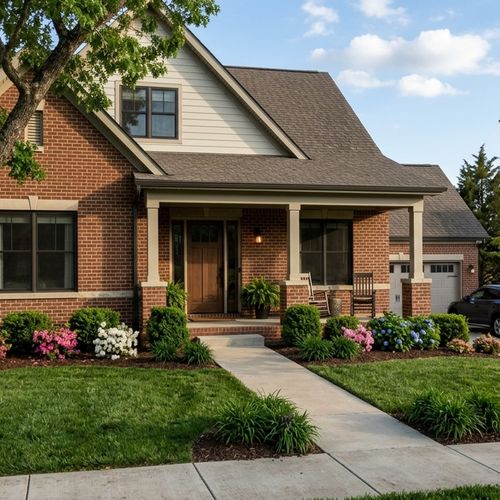


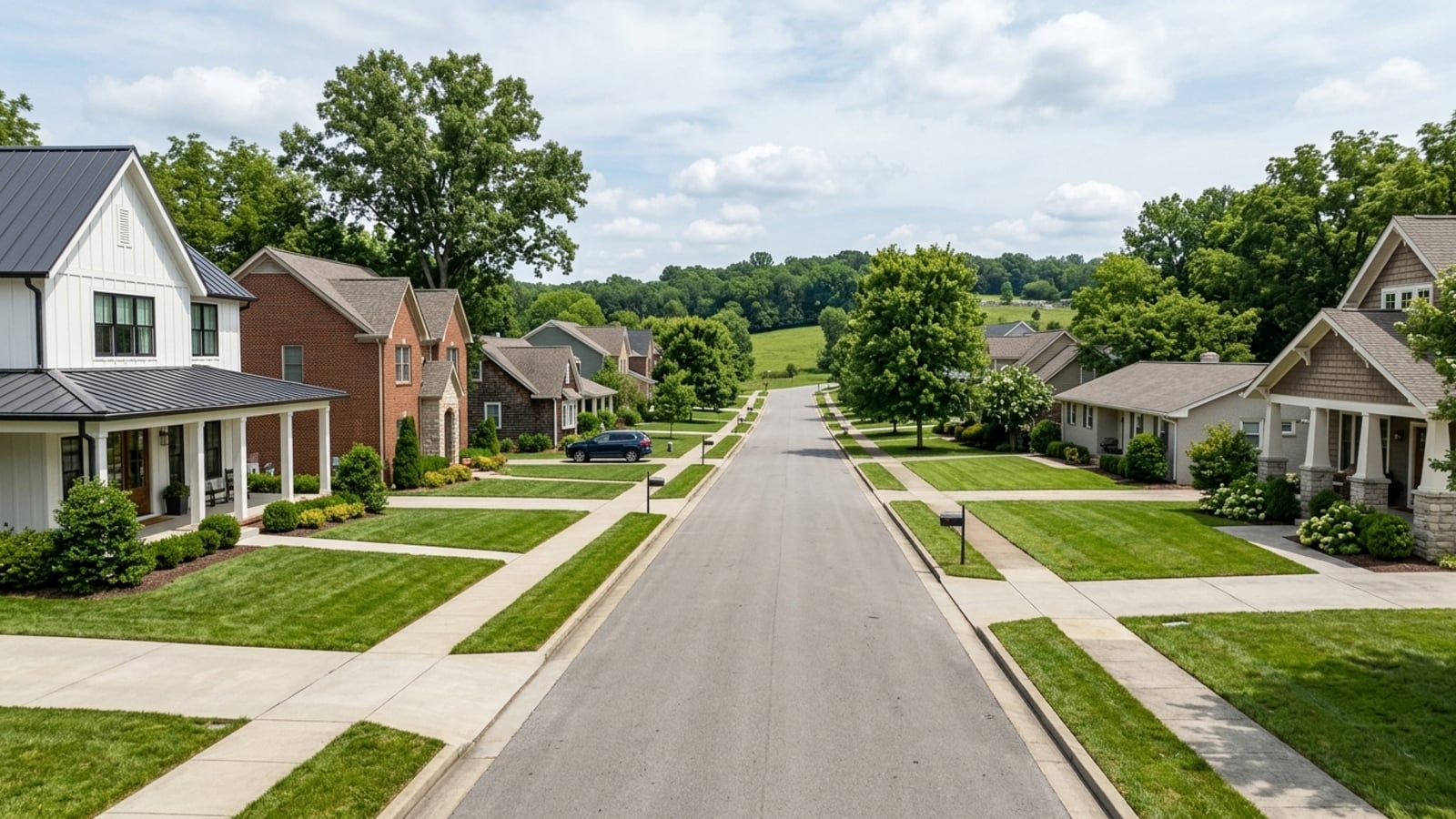
At that price point, if you are selling a home in Thompson's Station, the final settlement statement will have several deductions pulling at your proceeds before anything lands in your account.
Knowing what those deductions are, and roughly what they'll add up to, lets you plan your next purchase or investment without surprises. Sellers carry a different set of fees than buyers do, running from agent commissions all the way down to county recording charges.
What Sellers Pay at Closing in Tennessee
On your side as the seller, closing costs are the fees subtracted from the buyer's purchase price before the remaining balance reaches you. In any real estate transaction, both sides of the table have costs.
Those fees pay the people who marketed the home, managed the paperwork, and transferred the title. Whatever's left after those deductions and your mortgage payoff is your actual net profit. You rarely need to write a check at closing, unless you owe more on the mortgage than the home is worth.
Closing costs vs. sale proceeds
Your sale proceeds are the total amount the buyer pays. Closing costs are the service and administrative fees the escrow or title company pulls directly from those proceeds. The two are often conflated, but understanding the distinction is what lets you read a settlement statement without squinting.
Seller costs vs. buyer costs
Buyers handle loan origination, appraisals, home inspections and, under Tennessee law, the state transfer tax. You, as the seller, cover agent commissions and the owner's title insurance policy. That division is standard across Tennessee, though specific concessions can always be written into the purchase agreement.
Average Seller Closing Costs in Thompson's Station
Seller closing costs in Tennessee come from three places: agent commissions, which are negotiable, the title and settlement fees, and the deed tax and recording fees. Ask me for a net sheet on your price before you list and I'll show you every line.
Who Pays Closing Costs in Tennessee: Buyer or Seller?
Both parties pay closing costs in Tennessee. Which fees land on which side depends on state customs, the buyer's loan type, and whatever gets negotiated into the purchase contract.
Buyers tend to face a longer list of individual line items, but sellers typically pay a larger total dollar amount. That's because commissions, which fall entirely on the seller's side, make up the bulk of the transaction's overall expense.
What the seller typically covers
You'll cover the listing agent and buyer's agent commissions and the owner's title insurance policy. You'll also pay prorated property taxes through your last day of ownership and any outstanding homeowners association dues.
What the buyer typically covers
Buyers pay for anything tied to their financing, mortgage origination fees, credit report pulls, appraisal charges, along with their own title insurance policy, property inspections, and the first year of homeowners insurance.
Negotiating the split
Buyers sometimes ask sellers to cover a portion of their closing costs, particularly when they need help with upfront cash. You can agree to keep the deal moving, counter with a smaller concession, or decline and ask them to cover their own expenses. It's entirely negotiable.
Itemized Closing Costs for Sellers
Knowing each line item means you can sit down with your settlement statement and follow it. The escrow or title company will send you an itemized list of deductions a few days before closing, here's what you'll find on it.
Each entry represents a specific service or tax required to legally transfer ownership in Williamson County.
Real estate commissions
Commissions are your single largest expense, and they are negotiable. That fee is typically split between your listing agent and the buyer's agent.
Transfer taxes and recording fees
Tennessee charges a real estate transfer tax of $0.37 per $100 of the sale price. That's $3.70 per $1,000. The statute puts it on the buyer: it "shall be paid by the grantee or transferee" (Tenn. Code Ann. 67-4-409), so it usually lands on the buyer's side of the settlement statement unless your contract says otherwise. In Williamson County, recording a deed costs $12.00 for the first two pages and $5.00 for each additional page, plus a $1.00 register fee when the state tax applies.
Title, escrow, and attorney fees
The title company charges an escrow or settlement fee to manage the transaction and distribute funds. You'll also pay for the owner's title insurance policy, which guarantees the buyer receives a clear title free of liens or disputes.
Prorated property taxes and HOA dues
You owe property taxes for the exact number of days you owned the home during the tax year. If you've already paid the annual bill, the buyer reimburses you for their portion; if the taxes are unpaid, your share gets deducted from your proceeds at closing.
Estimating Your Net Proceeds
Your net proceeds are the number that matters, what you'll have available for your next down payment or investment after everything else is settled.
A rough manual estimate works like this: start with your target sale price, subtract the commission you agreed to, subtract the estimated closing costs, then subtract your remaining mortgage balance. Your agent will also prepare a formal net sheet before you list, which accounts for your specific loan payoff and any expected concessions.
Calculating your costs as a seller
Start with the estimated sale price. Pull out the commission, then the closing costs, then your mortgage payoff. What's left is the cash you'll receive at closing.
Estimating costs for a cash sale
When a buyer pays cash, there's no mortgage origination or lender-required appraisal on their side of the ledger. Your costs don't change much, though: recording fees and agent commissions still apply regardless of how the buyer is financing.
Ways to Reduce Your Seller Closing Costs
Some fees are fixed by state or county law and aren't going anywhere. Others have room to move.
The real leverage is in professional fees and how you respond to buyer requests. Getting ahead of both before you list is where the savings tend to show up.
Negotiating commissions and concessions
Commissions aren't set by law, and you can discuss the percentage with your listing agent before signing anything. On the buyer side, declining requests for repair credits or closing cost assistance also keeps more equity in your pocket.
Timing your sale
Closing at the end of the month reduces the prorated interest you'll owe on your current mortgage. It's a small thing, but it means you're not paying extra days of interest, property taxes, or HOA fees just because of where the calendar fell.
Property tax figures are the county and city rates published for the year shown and are for planning only. Your actual bill depends on the assessed value, any exemptions and the city or district the home sits in. Confirm with the county assessor or trustee and your tax professional before you rely on a number.
Frequently Asked Questions
Who pays closing costs in Tennessee, the buyer or the seller?
Both parties pay closing costs in Tennessee. Sellers typically cover agent commissions and title insurance, while buyers pay for loan origination, appraisals, inspections and, by statute, the state transfer tax.
What are the typical closing costs on a $300,000 house in Thompson's Station?
It depends on the commission you agree to, the title and settlement fees, and the deed tax and recording fees. I run a net sheet on your exact price so you can see every line.
How do I calculate my net proceeds after seller closing costs in Thompson's Station, TN?
Subtract your current mortgage payoff balance from the final sale price. Then subtract the agent commission and the estimated closing fees to find your net cash.
Can a seller refuse to pay or negotiate closing costs with the buyer?
Yes. If a buyer asks for a concession in the purchase offer, you can decline, counter, or agree to cover a portion. It's your call.
How much can a seller contribute toward the buyer's closing costs in Tennessee?
It depends on the buyer's loan type. Conventional loans typically cap seller concessions at 3% to 9% of the purchase price, while FHA loans allow up to 6%. Check the current program terms with your lender.
Is there a sales or transfer tax on a home sale in Tennessee?
Yes. Tennessee charges a real estate transfer tax of $0.37 per $100 of the sale price, which works out to $3.70 for every $1,000 of the home's value. By statute, the buyer pays it.
How do I determine my property value in Thompson's Station before calculating closing costs?
You can start by getting a property valuation in Thompson's Station to see where your house stands in the current market. Your agent will then use this baseline figure to prepare a formal net sheet before you list.
Wondering whether you'll owe tax on the gain? See my guide to capital gains tax on a home sale in Tennessee. Selling on your own? Here's how to sell a house by owner in Tennessee.
Check out this article next