


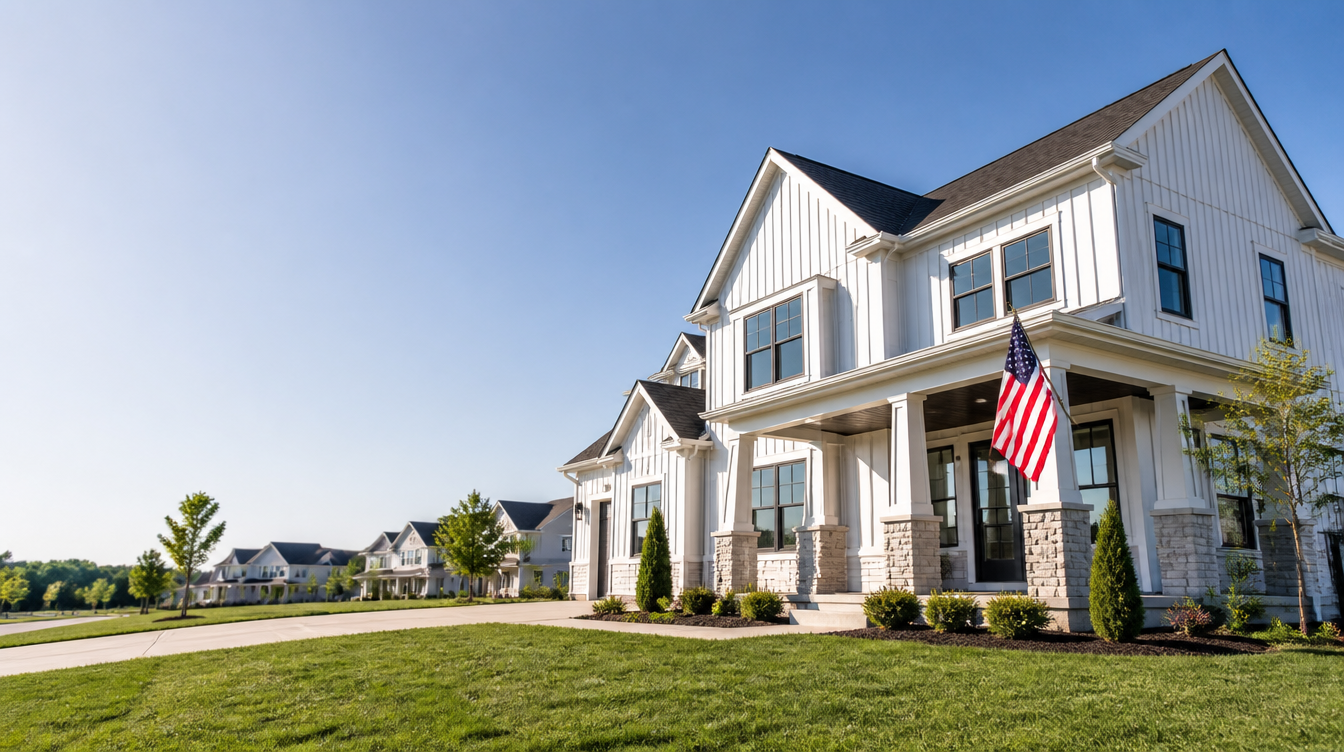
Drive through Spring Hill and it's model homes and framing crews as far as you can see. New construction is the whole game here. And in every one of those model homes, a builder's preferred lender is gently steering you toward conventional financing. If you're a veteran, following that nudge without thinking can cost you your down payment and a PMI-free monthly payment.
Here's the straight version of how to use your VA loan on a Spring Hill new build. What actually works, what the builder's rep won't tell you, and the traps that cost veterans weeks and money. I'm Kimo Quance. Coast Guard veteran, an investor in real estate for over 20 years, and a Realtor since 2013. Let's get into it.
Can You Use a VA Loan to Buy New Construction in Spring Hill?
Yes, and for most Spring Hill buyers it's simpler than the myths suggest. The master-planned communities going up all over town are production homes, and you buy a finished or soon-to-be-finished home from the builder using a standard VA purchase loan. Zero down, no monthly mortgage insurance, the full benefit, on a brand-new house.
That's different from a VA construction loan, which finances the land and the build itself in one closing. Those exist, and the VA standardized the program in 2025, but for the typical Spring Hill buyer picking a home in a builder's community, you're using a regular VA purchase loan on new construction. Keep those two straight, because they run on different timelines.
Why Do Spring Hill Builders Push You Toward Conventional?
Follow the money. Builders partner with a preferred lender, and they dangle incentives, closing-cost credits, design-center dollars, if you use that lender. Those preferred lenders often prefer conventional or aren't set up to run VA smoothly, so the whole sales process quietly nudges you that direction.
Here's what they won't volunteer: you have the right to use your VA loan, and you can often still capture the builder's incentive while financing with a VA-savvy lender, or negotiate the difference. Don't trade a benefit you earned, zero down and no PMI, for a one-time closing credit without running the real math. Sometimes the incentive wins. Often the VA loan wins by more. Do the comparison instead of taking the rep's word for it.
Do Builders Still Need a VA Builder ID?
No, and this is where a lot of outdated advice trips people up. As of a 2025 VA change, builders no longer need a VA-issued Builder ID for most new and proposed construction. That requirement used to add weeks of delay, and it's gone.
What replaced it: your lender vets the builder directly, checking their state license, insurance, warranty coverage, and track record. So the question isn't "does this builder have a VA ID" anymore. It's "does this builder meet my lender's standards and know how to work a VA deal." Most established Spring Hill builders clear that bar easily.
What Warranty and Inspections Does a VA New Build Need?
The home has to meet the VA's minimum property requirements at completion, the same safety-and-soundness standards as any VA purchase: sound structure, working systems, safe water, no health hazards. On new construction that's rarely a problem, since everything's new.
On the warranty side, lenders typically want at least a one-year builder workmanship warranty, and some want a longer insured structural warranty plan. Again, reputable production builders already provide this, it's standard. The VA appraisal still happens, confirming the finished home's value and condition before you close.
How Does the VA Appraisal Work on a Home That Isn't Finished Yet?
This is where timing matters. If the home is complete, it's a normal VA appraisal. If it's still being built, the appraisal and the builder's completion schedule have to line up, and the loan closes once the home is finished and passes.
The real risk on a longer build is your interest rate. If your home is six to twelve months out, the rate you were quoted at contract may not be the rate at closing. Talk to your lender early about extended rate locks or a float-down option, and build your plan around the completion date. Get this wrong and a delay can cost you real money at the rate lock.
Is Spring Hill a Smart Place to Use Your VA Benefit?
For a lot of veterans, yes. Spring Hill gives you newer homes and more square footage for the dollar than you'll find up in Franklin, while still sitting in a growing, well-located pocket of Middle Tennessee. It straddles Maury and Williamson counties, puts you within reach of the Cool Springs job centers and Columbia, and it's been one of the fastest-growing communities in the region for good reason.
If you're weighing it against nearby options, Spring Hill and Thompson's Station both give you that newer-construction value a bit south of the pricier Franklin market. The right pick comes down to your budget, your commute, and which community fits your life.
What Should You Watch Out For on a Spring Hill New Build?
A few things I see trip up veterans:
The preferred-lender incentive trap, where the credit looks great until you realize what you gave up in down payment and PMI. Extended build timelines colliding with your rate lock. Upgrades and lot premiums quietly inflating your price above what the home appraises for. Builders whose reps have never run a VA deal and don't sequence it right. And the big one: the community's on-site agent works for the builder, not for you. Bring your own representation so someone's actually protecting your interests at the negotiating table.
None of these kills the deal. They just need someone in your corner who's done it before.
Key Takeaways
- You can buy new construction in Spring Hill with a standard VA purchase loan, zero down and no PMI, separate from a VA construction loan that finances the build.
- Builders steer you toward their preferred lender and conventional financing. You can still use VA, and often capture the incentive too. Run the math.
- The VA Builder ID requirement is gone as of 2025. Your lender vets the builder directly instead.
- Expect a one-year builder workmanship warranty and a VA appraisal confirming the home meets minimum property requirements at completion.
- On longer builds, protect your interest rate with an extended lock, and bring your own agent, because the on-site rep works for the builder.
Frequently Asked Questions
Can I use a VA loan to buy a new construction home in Spring Hill?
Yes. For a home in a builder's community, you use a standard VA purchase loan with zero down and no monthly mortgage insurance. A VA construction loan that finances the build itself is a separate, different product.
Do Spring Hill builders have to be VA approved?
Not with a VA Builder ID anymore, that requirement was removed in 2025. Your lender now vets the builder's license, insurance, warranty, and experience directly.
Can I take the builder's incentive and still use my VA loan?
Often, yes. You can sometimes capture the builder's closing-cost credit while financing with a VA-savvy lender, or negotiate. Always compare the incentive against the value of zero down and no PMI before you decide.
What happens to my rate if the home takes months to build?
Your quoted rate may change by closing on a longer build. Ask your lender about extended rate locks or a float-down early, and plan around the completion date so a delay doesn't cost you.
If you're a veteran eyeing a new build in Spring Hill, don't let a model-home rep talk you out of your benefit. Let's line up a VA-savvy lender, read the builder contract with clear eyes, and make sure your loan and your timeline actually fit. Call or text me at 615-392-1186. For the full picture on buying, selling, and building wealth with your benefit, start at my veterans page.
Builder paying for a temporary buydown on your VA loan? It counts against the 4% concession cap. Run the numbers on my rate buydown calculator before you sign.
Every builder selling in Spring Hill right now, with the county for each lot, is on my Spring Hill new construction page.