


Quick answer: A short sale is when you sell your home for less than you owe and your lender agrees to take the sale proceeds and release its lien. The lender has to approve the price, the buyer and the closing costs first. On an FHA loan, it runs through HUD's pre-foreclosure sale program.
You owe more on the house than it'll sell for. You're behind on the payment. And every week there's another envelope from your servicer with "loss mitigation" or "foreclosure" somewhere on the page.
Here's what a lot of people in that spot don't realize. You may still be able to sell it yourself, on a real timeline, with your lender's sign-off, before it ever gets to a trustee's sale.
That's a short sale. I walked two Columbia homeowners through one over the past year, both in Maury County, both on FHA loans that went through HUD's pre-foreclosure sale program. Everything below comes from those two files and from HUD's own rulebook. No guesses.
What a short sale is, and what it isn't
HUD's handbook defines it plainly: a pre-foreclosure sale, "also known as a Short Sale," is a sale that brings in less than what's owed, where the lien holders agree to release their liens and forgive the deficiency.
It is not a foreclosure. You're still the seller. You pick the agent, you sign the contract, you're at the closing.
It is not a loan modification either. A modification keeps you in the house. A short sale gets you out of it, cleanly, with the lender's approval.
And it isn't fast or automatic. Every number on the closing statement gets reviewed by the servicer, and on an FHA loan, measured against HUD's rules.
Cameron's story: from foreclosure letters to a closed sale
Cameron S. bought a home in Columbia, then moved out of state for work. The cost of living where he landed, plus a mortgage back in Tennessee, didn't work. By the time he called me in January 2026 he was months behind, and his servicer was sending foreclosure-prevention letters. No foreclosure had been filed. But he could see where it was headed. The house had already been on the market with another agent for 236 days without a single offer.
We signed the listing the same day he called. The next day I was at the house, and Cameron, his servicer's loss mitigation line and I were on a three-way call so the servicer would talk to me on his behalf. Nine days after that first call, the house was live.
Cameron S., Columbia, in his own words. Recorded May 2026 after his short sale closed, and used with his permission.
That first listing had been priced too high for an investor and too high for the person who'd actually live in it. We fixed that, got it cleaned up and photographed, and got the power and water back on ahead of a winter ice storm.
Then it got bumpy. Our first buyer backed out after the inspection. I had a second buyer's agent on the phone the same day and a new contract at the same price three days later. I sent it to the servicer at the same numbers, and approval came 16 days after that.
63 days after the house went live, the lender approved the short sale. It closed in May. He sold for less than he owed, with the lender's approval, and brought nothing to the closing table.
In Cameron's words:
"What surprised me most about working with Kimo was just how little I had to do."
Cameron S., Columbia"Truthfully, without Kimo I would have faced foreclosure, but thanks to his expertise, we were able to pull off a short sale and save me a lot of time, stress, and money."
Cameron S., Columbia, Zillow review
Who has to say yes: how HUD's pre-foreclosure sale program works
If your loan is FHA, the rules come from HUD Handbook 4000.1. Your servicer applies them. Here's what that looks like on an actual file.
Your situation has to qualify
For a standard FHA short sale, you have to tell the servicer about a financial hardship, the loan has to be at least 61 days past due on the day the servicer approves you, and you have to have exhausted or been found ineligible for the options that would let you keep the house.
I'm not telling you to miss a payment to get there. If you're current and thinking about this, talk to your servicer and a HUD-approved housing counselor first.
Why the "keep the house" offer comes first
Because of that last requirement, the servicer has to look at keeping you in the home before it looks at a sale. In Cameron's file, the servicer approved a loan modification about a month after he listed. He'd already decided he couldn't make it work, so he declined it in writing the next day, and that let the short sale review move forward. The second homeowner did the same thing.
That's your decision to make, not mine. If keeping the house is possible and right for you, take a hard look at the offer. If you've decided to sell, say so in writing so the file doesn't sit.
The lender approves the price, the fees and the concessions
Before anyone signs off, the servicer orders an "as-is" appraisal from an FHA roster appraiser. HUD's rule is that the home is listed at no less than that as-is value.
In Cameron's file, I asked whether the price could come down to save the first buyer. The servicer's answer was that any change needed HUD, and HUD wasn't allowing it. That's the trade. You get a path out, and in exchange the lender controls the numbers.
The net proceeds floor
HUD sets a minimum the sale has to net, measured against that as-is appraised value, and it steps down the longer the house has been marketed:
- Days 1 to 30 of marketing: at least 88 percent
- Days 31 to 60: at least 86 percent
- Days 61 to 120: at least 84 percent
In the second file, the servicer's math came in about $1,500 short of the 88 percent line. The buyer's agent and I reduced our commission by that amount, and the deal kept moving.
What can come out of the sale, and what can't
HUD's list of allowable costs includes a sales commission at the prevailing rate, capped at 6 percent, prorated taxes, and the closing costs a seller normally pays. Repair credits, home warranties, the lender's title policy and discount points on a buyer's non-FHA loan can't come out of the sale.
In both of my files, the servicer held help toward the buyer's closing costs to 3 percent of the price, and the seller's line on the closing statement had to read zero. Both sellers brought $0 to closing.
One more thing worth knowing. HUD doesn't let the servicer charge you a fee to participate, and it doesn't count third-party "negotiation fees" as an allowable cost. My pay is the commission, paid at closing as part of the approved sale.
HUD also offers owner-occupants who act in good faith and close a short sale compensation of up to $3,000, which can go toward liens, the buyer's costs or moving.
The listing amendment
HUD requires a specific cancellation clause in your listing agreement. In plain English: if the property ends up going to the lender or the mortgage insurer, you can cancel the listing without owing a commission.
Both of my servicers asked for that amendment before approval. I'd rather you see it on day one than day 60.
The arm's length rule
The sale has to be arm's length: buyer and seller unrelated, no side deals, no hidden terms. Everyone who signs the contract also signs HUD's Pre-Foreclosure Sale Addendum. In Cameron's approval package, the servicer sent that addendum along with an arm's length affidavit for signature.
So no, you can't sell it to your cousin for a song and rent it back.
How long a short sale takes
There's no honest average to give you. What I can give you is two real timelines:
- Cameron: 63 days from going live to lender approval, then 55 days from approval to close.
- The second file: 152 days from listing to approval, then 2 days from approval to close. 90 days from accepted offer to closing.
Two deals are two deals, not a statistic. The full breakdown, and what ate the time in each, is in How Long Does a Short Sale Take in Tennessee?.
HUD's own clock: once the servicer sends your Approval to Participate, you generally have four months to get a contract, and the home has to be in the MLS for at least 15 days before offers are evaluated.
Short sale vs foreclosure vs deed in lieu
The short version:
- Short sale: you sell it, with the lender's approval.
- Foreclosure: the lender sells it. In Tennessee that usually means a trustee's sale under the deed of trust after a published notice.
- Deed in lieu: you hand the deed to the lender. On an FHA loan, HUD generally wants you to have tried a short sale first.
Each one lands differently on who controls the sale, what happens to any remaining balance and how soon you can buy again. I lay it out side by side in Short Sale vs Foreclosure in Tennessee. Questions about a deficiency, or what your lender can still pursue, belong to a Tennessee real estate attorney.
What it does to your credit, and when you can buy again
HUD makes servicers tell you in writing that a short sale is reported to the credit bureaus and will likely affect your ability to get another mortgage and other credit. I won't guess at a score. Nobody honest can.
When can you buy again with FHA? HUD generally requires three years from the date title transferred in the short sale. There are exceptions:
- If every mortgage payment was made within the month due for the 12 months before the short sale, and your installment debts were paid the same way, you can be eligible sooner.
- A lender can make an exception for documented circumstances beyond your control, like a serious illness or the death of a wage earner, if you've reestablished good credit since. A job transfer or relocation doesn't count.
VA and conventional loans have their own waiting periods. Ask a loan officer before you decide.
And taxes: the IRS treats canceled debt as generally taxable unless an exclusion applies, and lenders usually report it on Form 1099-C. Get advice from a tax professional about your own situation before you close.
A second Columbia short sale, start to finish
This homeowner asked to stay anonymous, so you'll get the file, not the name.
They listed with me in August 2025, two payments behind and in a forbearance plan. The market was soft. We made three price cuts over two months, each one backed by sales of the same floor plan nearby, and an offer came in October.
Then the paperwork marathon started. Their servicer won't review anything until the package is complete, so we built it within a week: purchase contract, financial worksheet, pay stubs, bank statements, listing agreement, preliminary settlement statement and the authorization letting me talk to the servicer. I phoned the servicer every week or two and logged every call.
The servicer's appraiser came out in November. In December the file was accepted into HUD's program, and on Christmas Eve we learned the numbers were about $1,500 short of the 88 percent line. The buyer's agent and I cut our commission to close the gap. Then a holiday backlog at HUD, and a January 1 reset of taxes, interest and HOA dues, meant redoing the closing statement twice more.
Approval came January 7, 2026. A commission mismatch on the final statement forced a reissue on closing day. We closed January 9. The seller brought nothing to the table, and the servicer's clear to close included an executed deficiency waiver.
Do you even need a short sale?
Maybe not. Before you go down this road, find out what the house is actually worth today against what you owe.
- If you have equity, you don't need your lender's permission to sell. A regular listing or multiple cash offers may get you out faster and cleaner.
- If you're close to even, there may be creative ways to sell worth a look.
- If you have a low-rate FHA or VA loan, a buyer may be able to take it over. Here's how assumable mortgages in Middle Tennessee work.
A short sale is for when the numbers really are upside down and the payment really can't continue. I'll tell you straight which one you're looking at.
What to do first
- Pull your numbers. Your latest mortgage statement, plus anything else secured by the house: a second mortgage, a HELOC, HOA dues.
- Find out what it's worth. I'll run it for you. That one number tells you whether you're in short sale territory at all.
- Call your servicer's loss mitigation department. Ask what options you're being reviewed for. If your loan is FHA, ask for the pre-foreclosure sale information sheet, form HUD-90035.
- Talk to a HUD-approved housing counselor about all of your options, including the ones that keep you in the house.
- Get the right professionals on the questions that belong to them. A Tennessee real estate attorney for deficiency and foreclosure questions. A tax professional for anything about forgiven debt.
- Start the paperwork now. My servicers have asked for the signed purchase contract, a borrower financial worksheet, the last 30 days of pay stubs, two months of bank statements, the listing agreement, a preliminary settlement statement and a third-party authorization. A complete package is what gets reviewed.
- If a sale date is already on the calendar, read Can You Sell a House in Foreclosure in Tennessee? today, and call me today.
I live in Thompson's Station and work Maury, Williamson and Davidson counties, from Franklin and Thompson's Station to Spring Hill, College Grove and Nashville. Both of these files were in Columbia, in Maury County.
If you're behind and the house is worth less than you owe, let's look at your actual numbers before another envelope shows up. DM, text, or call me at 615-392-1186.
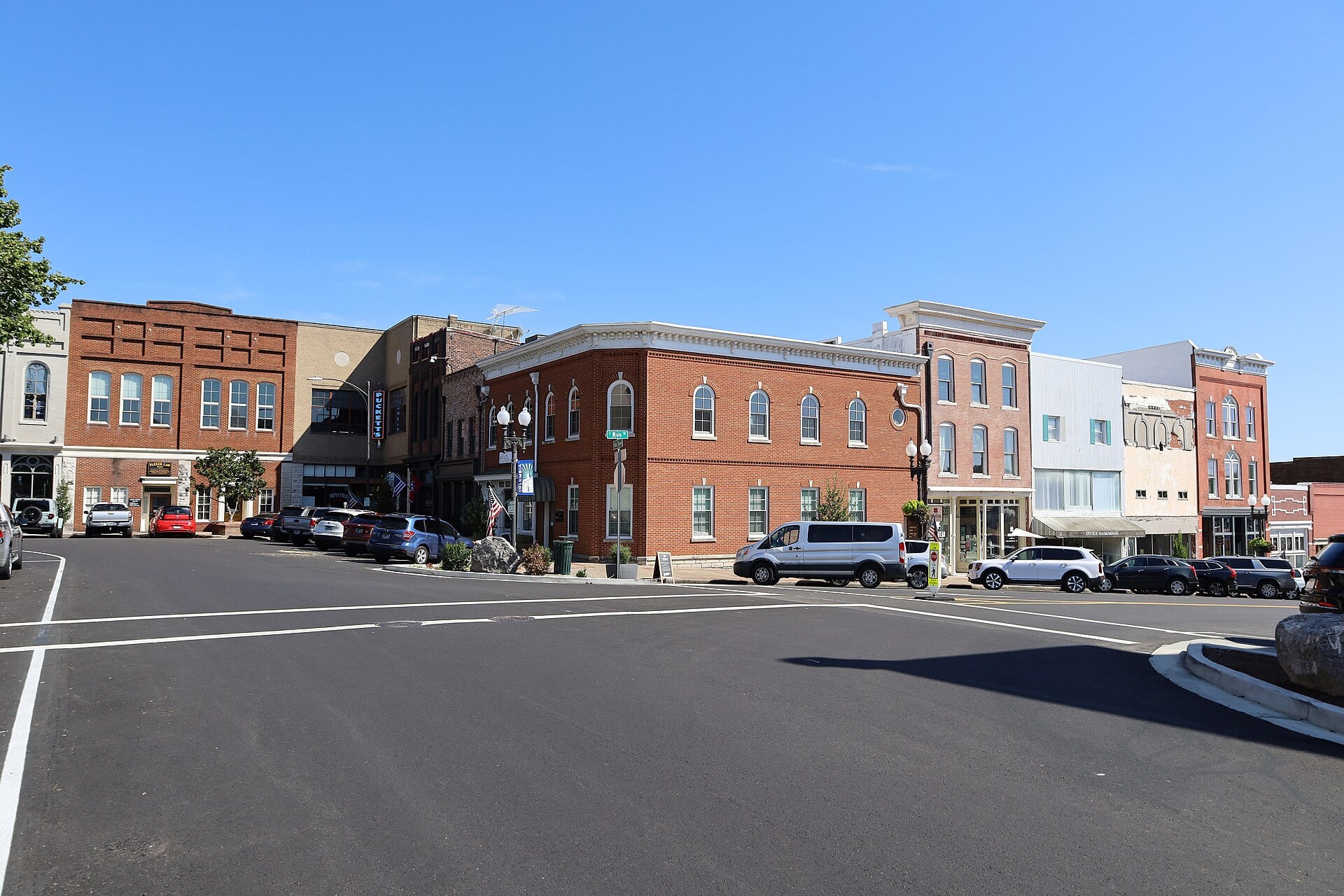
Header photo: Public Square, Columbia, by Antony-22, CC BY-SA 4.0, via Wikimedia Commons. Resized.
Frequently Asked Questions
What is a short sale in Tennessee?
A short sale is a sale of your home for less than you owe, where the lender agrees to accept the sale proceeds and release its lien. The lender has to approve the price, the buyer and the closing costs before you can close.
Who approves a short sale on an FHA loan?
Your servicer reviews it under HUD's pre-foreclosure sale program, and HUD's rules set the minimum the sale has to net and which costs can come out of it. Price changes after the servicer's appraisal go through that same review.
How long does a short sale take?
There's no standard number. In my two recent Columbia short sales, one took 63 days from going live to lender approval and closed 55 days later. The other took 152 days from listing to approval and closed two days after approval.
Do I have to pay anything at closing on a short sale?
In both of my recent short sales, the seller brought nothing to the closing table. The servicer required the seller's line on the closing statement to read zero. Your servicer's approval letter is what controls your file.
Can I buy a house again after a short sale?
For a new FHA loan, HUD generally requires three years from the date title transferred in the short sale, with exceptions, including for borrowers who made every mortgage payment on time in the 12 months before the sale. Other loan types have their own rules, so ask your loan officer.
Is forgiven mortgage debt taxable?
The IRS says canceled debt is generally taxable income unless an exclusion applies, and lenders usually report it on Form 1099-C. Get advice from a tax professional about your own situation.
Check out this article next