

Middle Tennessee offers a sharp contrast between dense city living and quieter suburban environments. Buyers looking at the region often weigh the fast-paced environment of Davidson County against the open spaces found further south in Williamson County. Comparing the real estate markets of Thompson's Station, TN vs. Nashville, TN reveals distinct differences in housing density, property costs, and daily commute patterns. Partnering with the best real estate agent in Thompson's Station, TN helps buyers evaluate these local options.
Thompson's Station sits about 25 miles south of downtown Nashville, positioned between the larger suburban centers of Franklin and Spring Hill. While Nashville features high-rise condos and established historic districts, Thompson's Station focuses on master-planned communities with larger acreage. Understanding the differences in home prices, commute times, and local infrastructure helps clarify which location fits your long-term plans.
Location and Geography of Middle Tennessee
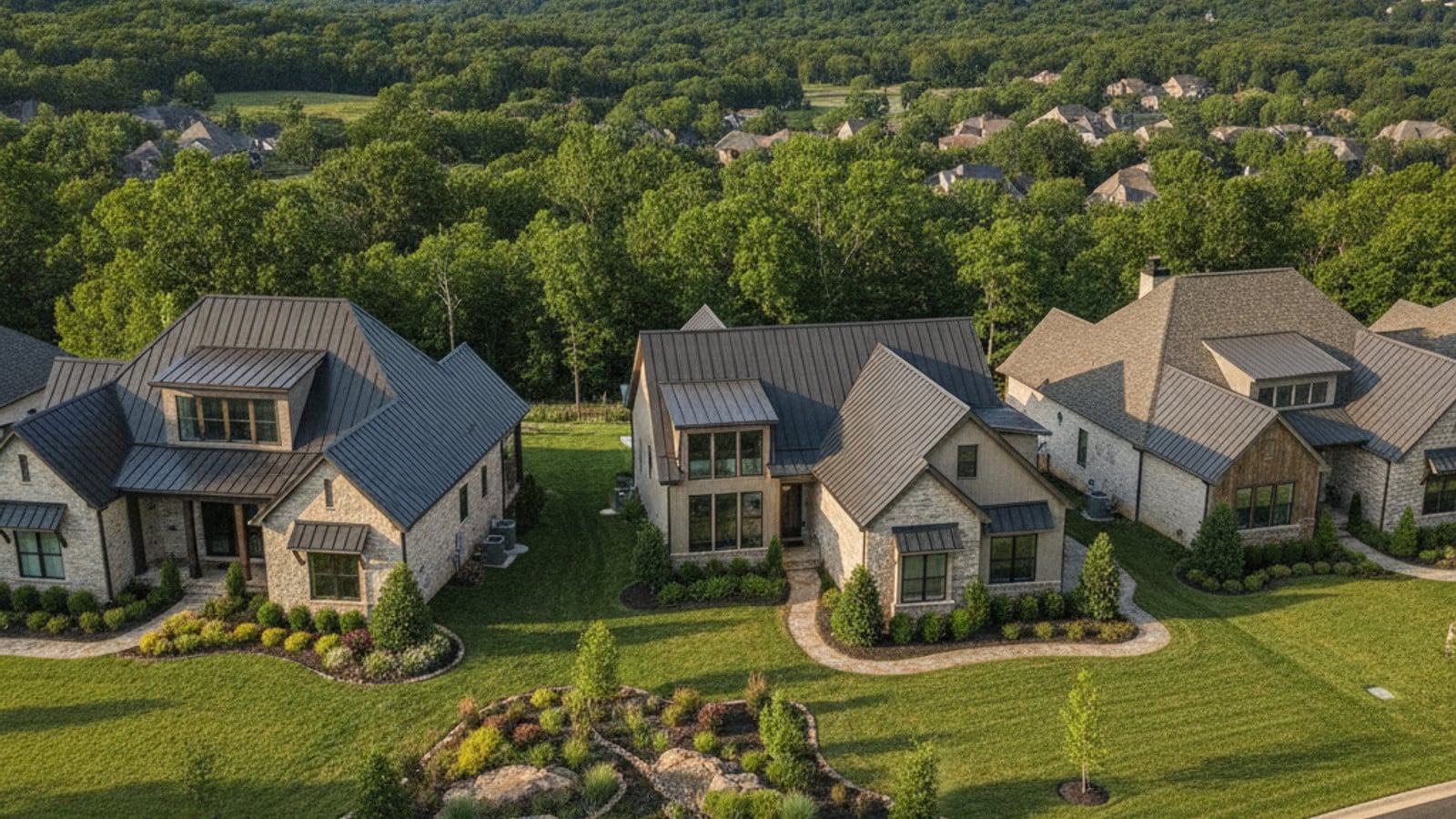
Thompson's Station spans a mostly rural-suburban footprint in the southern half of Williamson County. The town centers around a small historic core, but the majority of its residential areas spread out into former farmland and rolling hills. Residents live a short drive from Spring Hill to the south and Franklin to the north, relying on these neighboring cities for major retail centers and medical facilities.
Nashville operates as the economic and cultural center of the region, covering over 500 square miles within Davidson County. The city provides immediate access to major employment hubs, three interstate highways, and dense neighborhoods with mature trees. Living within the Nashville city limits means shorter drives to the international airport and major entertainment venues, but it often requires accepting smaller lot sizes and higher noise levels.
Home Prices and Property Types
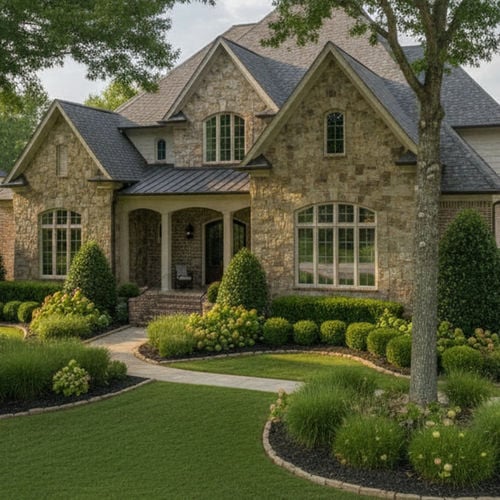
The housing inventory in Thompson's Station consists almost entirely of newer single-family homes and large master-planned developments like Tollgate Village. Buyers should expect larger lot sizes, modern construction, and community amenities like neighborhood pools and walking trails. You will rarely find high-density condos or attached townhomes in this specific market.
The urban market includes a wide variety of property types, ranging from downtown high-rise condominiums to mid-century ranch homes in established suburbs. Buyers focusing on Nashville will find more options at lower price points, though these properties often require updates or sit on lots under a quarter of an acre.
Property taxes also differ between the two municipalities. Thompson's Station residents pay Williamson County property taxes, which historically maintain lower rates compared to the combined Metro Nashville and Davidson County tax rates. Buyers should factor these annual tax differences into their monthly mortgage calculations when comparing similarly priced homes across the county line.
Commute Times and Highway Routes
Driving from Thompson's Station to downtown Nashville takes about 35 to 45 minutes during off-peak hours. The primary route runs straight up Interstate 65 North, connecting southern Williamson County directly to the city center. Commuters also use US Highway 31 as an alternative surface road when interstate traffic slows down, though this route features numerous stoplights through Spring Hill and Franklin.
Rush hour significantly alters these travel times. During peak morning and evening commutes, the drive between Thompson's Station and Nashville often extends up to 60 minutes or more. Buyers planning to commute daily should test the drive during their expected travel windows to understand the traffic patterns along the I-65 corridor.
Parks, Dining, and Local Amenities
Nashville holds the region's highest concentration of entertainment districts, professional sports venues, and restaurant networks. Residents within the city limits have immediate access to hundreds of dining options, from casual neighborhood cafes to high-end restaurants in the downtown core. The city also maintains a massive public park system, including the 3,000-acre Percy Warner and Edwin Warner parks for hiking and outdoor recreation.
Thompson's Station offers a quieter approach to local amenities, focusing on open green spaces and community preservation. Preservation Park and Sarah Benson Park provide residents with walking trails, open fields, and playgrounds directly within the town limits. For extensive shopping or diverse dining options, residents typically drive 10 to 15 minutes north to Franklin's Cool Springs commercial area or south to the retail centers in Spring Hill.
School District Zoning and Boundaries
Public school zoning represents a major difference for buyers comparing these two areas. Every home within Thompson's Station falls under the jurisdiction of Williamson County Schools. This county-wide district manages the elementary, middle, and high schools serving the town, and its specific zoning maps dictate exactly which facility a neighborhood attends.
Properties in Nashville are zoned for Metro Nashville Public Schools, a much larger district covering all of Davidson County. The Nashville system includes a mix of zoned neighborhood schools, academic magnet programs, and charter schools. Buyers should verify exact school zoning boundaries for any specific address before making an offer, as boundary lines occasionally shift based on county population growth.
Frequently Asked Questions
What is the cost of living difference between Thompson's Station and Nashville?
Housing costs drive the primary difference between the two areas. However, Nashville residents typically pay higher property tax rates and face elevated costs for daily services like parking and urban transit.
What is the commute like from Thompson's Station to Nashville?
The drive covers about 25 miles along Interstate 65 North. Without traffic, you can reach downtown Nashville in roughly 40 minutes. During morning and evening rush hours, commuters should plan for the trip to take an hour or slightly longer.
How do home prices and lot sizes in Thompson's Station compare to the Nashville real estate market?
Nashville offers smaller urban lots and attached condos that bring its median price down to the half-million range. Buyers wanting acreage will find more options in Williamson County.
Does Thompson's Station have its own school district?
No, the town does not operate an independent school system. All public school students living in Thompson's Station attend facilities managed by Williamson County Schools.
What are the best neighborhoods in Thompson's Station, TN?
Master-planned communities dominate the local housing market. Tollgate Village is one of the largest and most established developments, offering a mix of single-family homes and community amenities. Other notable subdivisions include Bridgemore Village and Canterbury, which feature larger lots and extensive sidewalk networks.
Are there enough dining and entertainment options in Thompson's Station, or will I need to drive to Nashville?
The town itself has a small selection of local restaurants and cafes near its historic center. For major retail shopping, movie theaters, or a wider variety of dining, most residents drive about 15 minutes to neighboring Franklin or Spring Hill rather than going all the way into Nashville.
Check out this article next